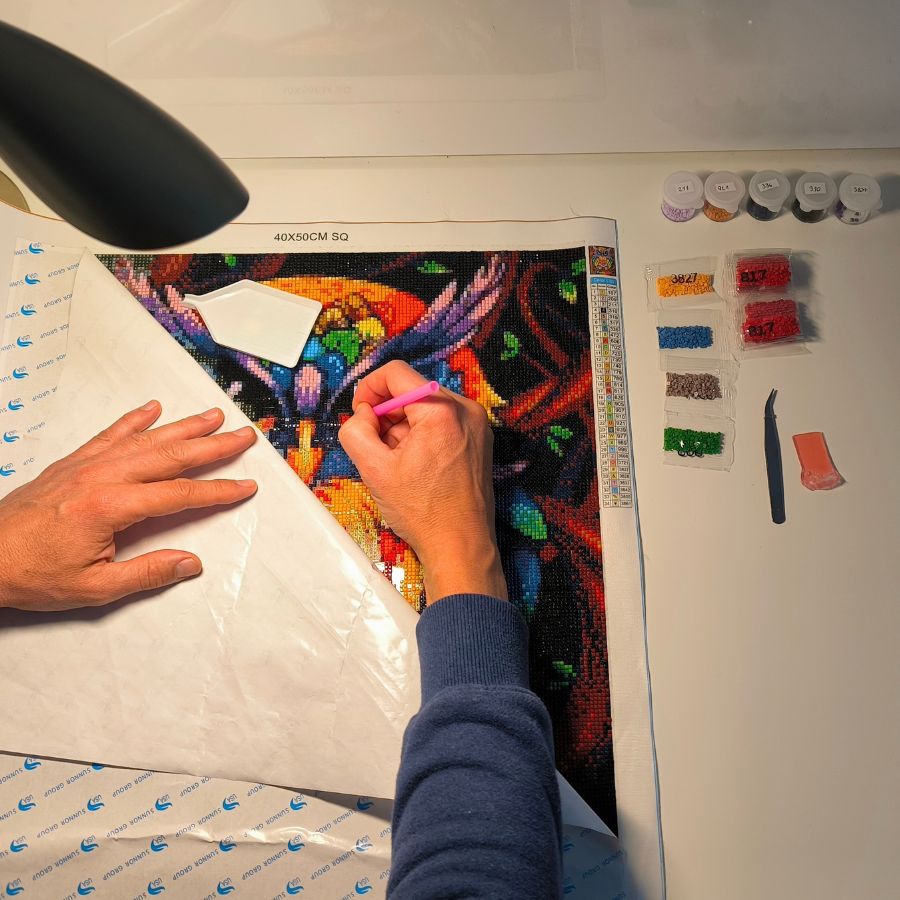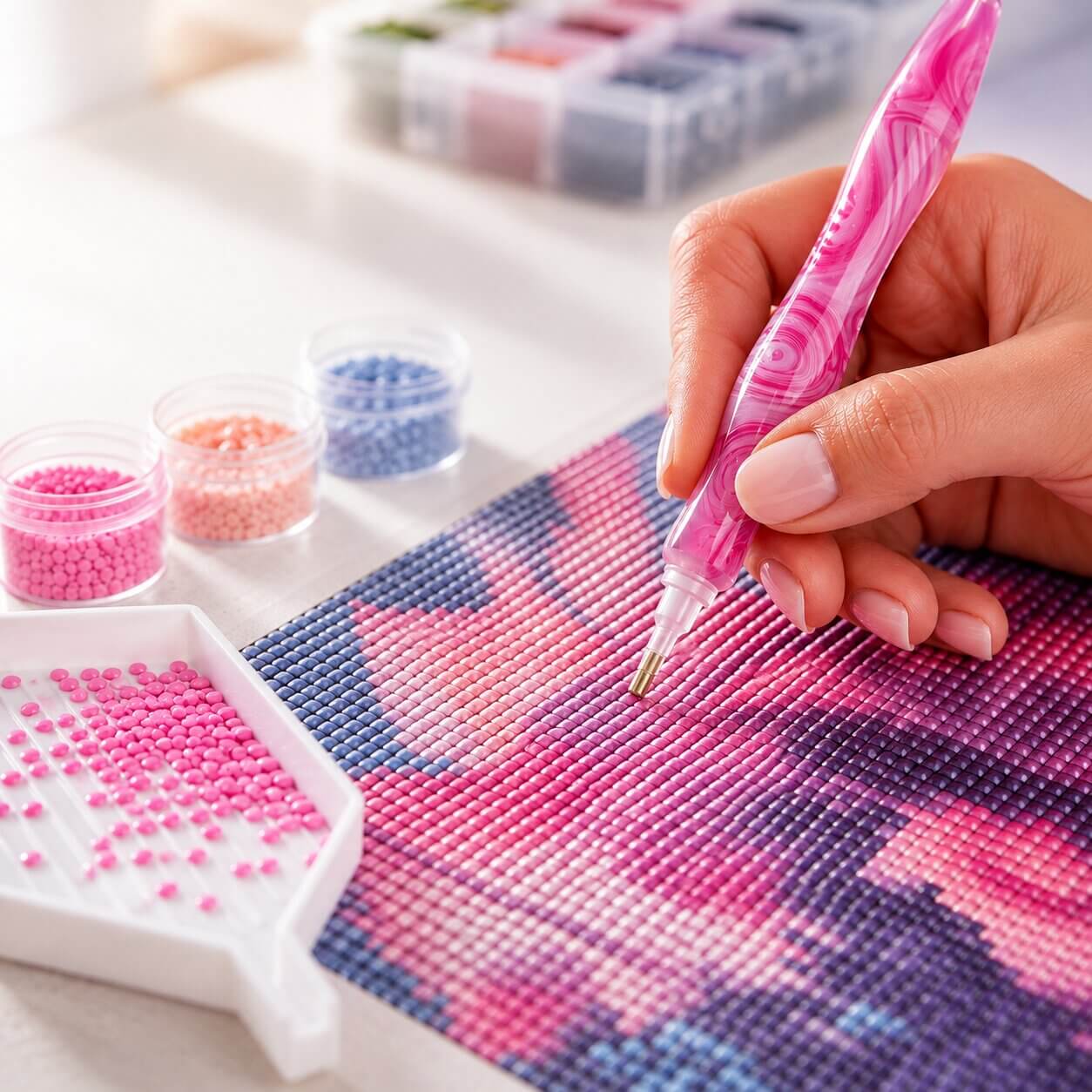

A diamond painting pen is the applicator used to pick up drills and place them onto the coded canvas. If you are new to diamond painting, the basic process is simple: load a small amount of wax into the hollow tip, touch the pen to the flat side of a drill, and place it on the matching symbol.
You do not need fresh wax for every drill. A properly loaded pen should keep working until the wax begins to lose its grip.
Basic plastic applicators are enough to finish an entire project. Thicker ergonomic pens, replaceable tips, and multi-placers mainly improve comfort or speed.
How Does a Diamond Painting Pen Work?
A standard diamond art pen has a hollow applicator tip. Pressing that tip into the wax fills the opening with a small amount of tacky material.
The wax grips the top of a resin drill strongly enough to lift it from the tray. When you press the drill onto the sticky canvas, the canvas adhesive holds it more strongly than the wax, allowing the pen to release it.

Wax is therefore only a temporary pickup material. It is different from the diamond painting adhesive that keeps drills attached to the canvas.
How to Put Wax in a Diamond Painting Pen
Loading the pen takes only a few seconds:
- Remove the clear protective film from the wax pad.
- Hold the pen upright over the wax.
- Press the hollow tip firmly into the wax once or twice.
- Lift the pen and check that the opening is filled.
- Test it on a drill in the tray.
You do not need to twist or scrape the pen through the wax. The goal is simply to fill the small opening at the tip.
If you are learning how to do diamond painting, start with the single-drill tip. It gives you more control while you learn how much pressure to use.
How Much Wax Should Be in the Pen?
Enough wax should fill the opening, but it should not form a visible lump around the tip.
Too much wax may squeeze out when you press against a drill. If you notice wax appearing on the drill surface, remove the excess and reload the pen with less pressure.
How Often Should You Refill the Wax?
There is no fixed number of drills you can place before reloading. Wax consistency, room temperature, pressure, the pen tip, and the drills themselves can all affect how long one fill lasts.
Add fresh wax when:
- the pen starts missing drills;
- drills fall from the tip before reaching the canvas;
- you need several attempts to pick up a drill;
- noticeably more pressure is required.
If the pen is still picking up drills normally, there is no reason to refill it.
Why Is My Diamond Painting Pen Not Picking Up Drills?
An empty or poorly loaded tip is the most common reason.
First, look at the opening. If it appears empty, reload the pen. If wax is already inside but the pen still does not grip, remove the old wax and replace it.
Wax can become compressed, dirty, or less tacky after repeated use.
Also check the drill itself. The pen should touch the flat upper surface rather than the faceted underside. If only a few pieces refuse to stick, those individual drills may be misshapen or dirty rather than there being a problem with the pen.
You can learn more about the different drill shapes and materials in our guide to diamond painting drills.
Why Does My Diamond Painting Pen Keep Skipping Drills?
A pen that picks up some drills but repeatedly misses others usually needs attention to the wax or tip.
Common causes include:
- too little wax;
- old wax packed deeply into the tip;
- pressing too lightly;
- pressing so hard that the wax is pushed farther inside;
- a worn or bent applicator tip;
- drills sitting at awkward angles in the tray.
Shake the tray gently until most drills settle flat between the grooves. Reload the pen and try again using light pressure.
Problems such as pressing too hard, overfilling the tray, or working with badly aligned drills are also covered in our guide to common diamond painting mistakes.
How to Remove and Replace Old Wax
Old wax does not always come out when you press the pen into a fresh pad.
Use tweezers, a toothpick, or another fine blunt tool to gently lift the material from the opening. Avoid pushing sharp objects deep into the applicator because they may deform a plastic tip.
Once the old wax is removed, wipe the outside of the tip and reload it.
Replacing the wax is useful when it has become dirty, hard, compacted, or noticeably less effective.
How to Clean a Diamond Painting Pen
A pen does not need a full cleaning after every session.
For normal maintenance:
- remove old wax from the tip when necessary;
- wipe the outside with a dry or slightly damp cloth;
- clean wax residue from interchangeable tips;
- let the parts dry before loading fresh wax.
Avoid soaking the entire pen unless its manufacturer says the material is washable. Decorative pens can contain resin, acrylic, metal fittings, glue, or other materials that react differently to water.
Extra applicators, trays, replacement tips, and storage supplies are available among our diamond painting tools and accessories.
When Should You Replace a Diamond Painting Pen Tip?
Basic plastic tips can gradually deform, particularly if you press hard against the tray or canvas.
Consider replacing the tip when:
- the opening becomes noticeably wider;
- the applicator no longer sits straight;
- wax keeps falling out;
- drills sit at an angle when picked up;
- the edge of the tip has become damaged.
A slightly bent replaceable metal tip can sometimes be carefully realigned. If it is badly bent, cracked, loose, or continues placing drills inaccurately, replacing it is usually the better option.
You can also switch to a thicker or more comfortable diamond painting pen if the basic applicator feels uncomfortable during longer projects.
How to Use a Diamond Painting Multi-Placer
A multi-placer is a wider pen tip that can pick up several drills at the same time.
Load it with wax just as you would a single tip. Then gently shake the tray until the drills form straight rows between the grooves.
Press the multi-placer lightly across a row of drills, lift them together, and lower them onto a matching row of symbols.
Multi-placers work best in large sections containing the same color. A single tip is usually easier around edges, isolated symbols, and areas where colors change frequently.
For better results:
- start with a smaller multi-placer;
- make sure drills are straight in the tray;
- use light pressure;
- work on long rows of the same symbol;
- correct small alignment problems after placing the drills.
Most diamond painters switch between a single tip and a multi-placer during the same project rather than using only one.
Can You Use a Diamond Painting Pen Without Wax?
A standard hollow-tip pen needs a tacky material inside the tip to lift drills.
Pink wax is the most common option, but reusable putty and other materials made for diamond art can also work. Some specialty applicators use their own tacky tips and do not require traditional wax.
Tweezers can also be used to place drills one at a time, although they are usually slower for large areas.
Frequently Asked Questions
How do you fill a diamond painting pen?
Remove the film from the wax pad and press the hollow pen tip firmly into the wax. The opening should contain a small plug of wax before you begin picking up drills.
Why won't my diamond painting pen pick up drills?
The most common causes are missing, old, or poorly loaded wax. Refill the tip first, then check for a bent applicator and make sure the drills are lying flat in the tray.
Why does the wax keep coming out of my pen?
You may be loading too much wax or pressing the pen too hard. Remove the excess, refill the opening, and use lighter pressure.
How do you clean wax out of a diamond painting pen?
Gently remove old wax with tweezers, a toothpick, or another fine blunt tool. Wipe the outside of the tip before adding fresh wax.
Is a diamond art pen the same as a diamond painting pen?
Yes. Diamond art pen, diamond painting pen, applicator pen, drill pen, and diamond painting stylus are commonly used for the same type of tool.
A basic pen, fresh wax, and light pressure are enough for most diamond art projects. Once you learn when to replace the wax and how firmly to press, picking up and placing drills becomes quick and consistent.