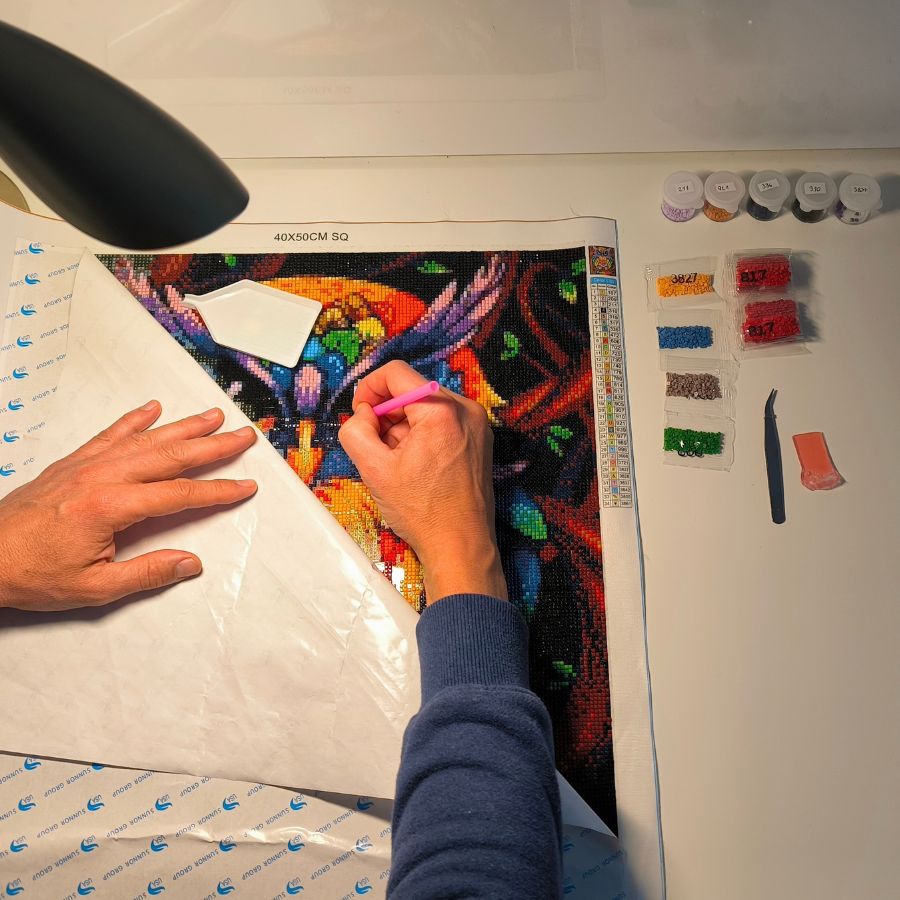

A good diamond painting workspace saves you from tired eyes, a sore back and drills lost on the floor. It needs four things: a flat, stable surface larger than your canvas, bright neutral light, your tools within easy reach, and a sitting position you can hold for an hour without aching.
This guide covers how much table space each canvas size needs, which light works best, how to sit so your neck and hands stay comfortable, and how to set up diamond art in small spaces like a bed or sofa.
What You Need for a Diamond Painting Setup
| Essentials | Nice to have |
|---|---|
| Flat, stable table or board | LED light pad |
| Chair with back support | Magnifier lamp |
| Daylight lamp | Roller and straightening tool |
| Tray, pen and wax | Ergonomic pen |
| Something to cover the canvas between sessions | Drill storage box |
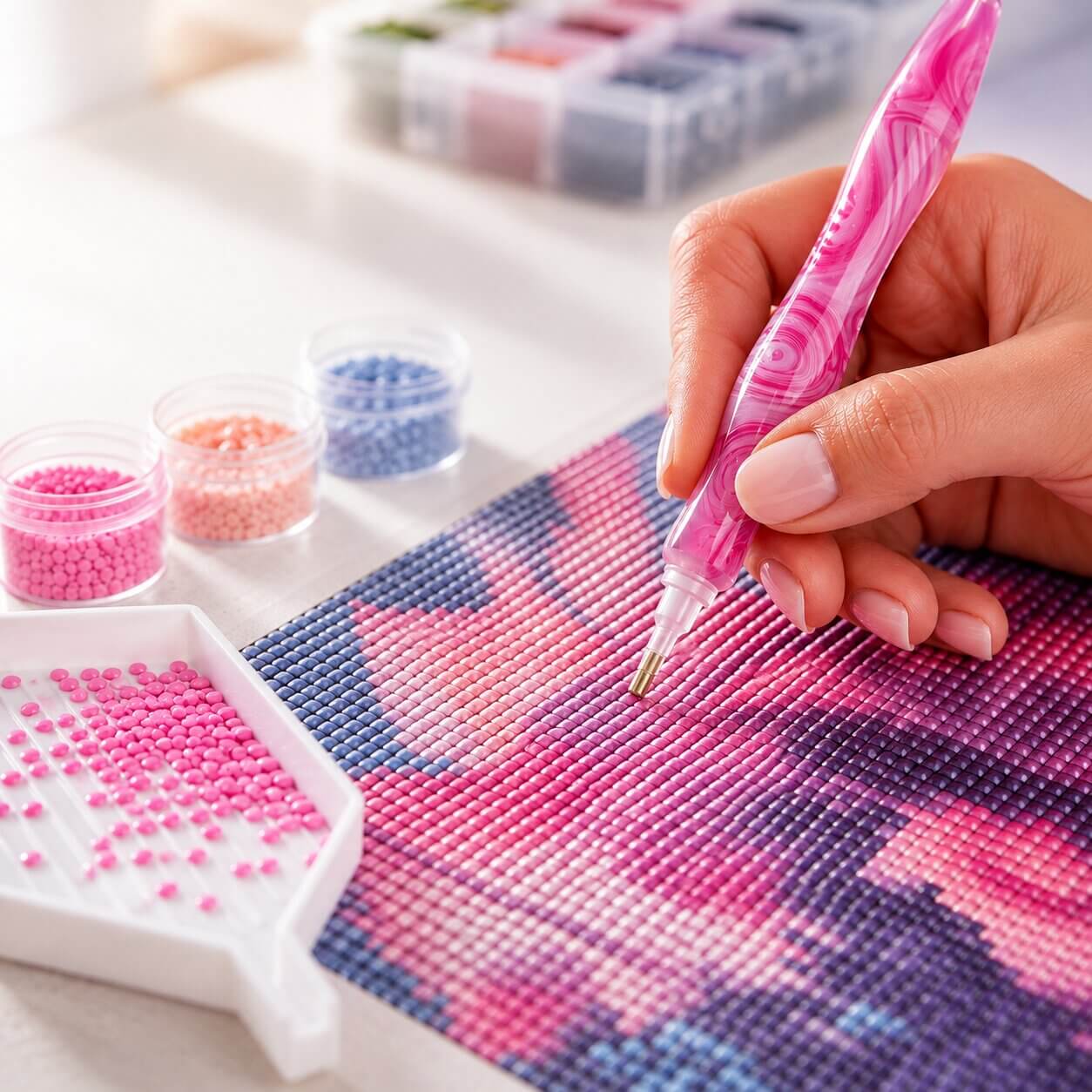
Most kits already include the tray, pen and wax. The extras in the second column make long sessions easier, and you can find them in the diamond painting tools collection.
Choosing a Table or Desk
How Much Space Each Canvas Size Needs
You need room for the canvas plus a strip of 20 to 30 cm on one side for trays and tools. If you have to reach over the canvas to get to your tray, the table is too small, and you will knock drills out of place sooner or later.
| Canvas size | Minimum free surface | What usually works |
|---|---|---|
| 20 × 20 cm (mini) | about 40 × 50 cm | Lap tray, side table |
| 30 × 40 cm | about 50 × 70 cm | Small desk, half of a dining table |
| 40 × 50 cm | about 60 × 80 cm | Standard desk or dining table |
| 60 × 80 cm | about 80 × 110 cm | Large desk or dining table |
These are rules of thumb, not exact limits. On a large canvas you can also roll up the finished part loosely, drills facing out, so you only need room for the section you are working on.

Some people buy a dedicated diamond painting table or workstation with built-in light. It works, but a light pad on any sturdy table gives the same effect for much less. If you do buy a craft table, look for adjustable height and tilt, a ledge that stops the canvas and light pad from sliding, drawers for trays and tools, and wheels that lock. If space is tight, a foldable table you can put away after each session is a good compromise.
Flat or Tilted Surface?
A slightly tilted canvas, around 15 to 20 degrees, is easier on your neck because you don't have to lean forward as much. A drafting board, a tabletop easel or a board propped on a book all work, as long as the canvas can't slide.
The catch is your tray. Drills roll out of a tray on a slope, so keep the tray flat on the table next to the tilted canvas, never on the board itself. Tape or clip the canvas edges so it stays in place while you press drills down, or lay a thin non-slip mat underneath.
Small Spaces: Bed, Sofa and Portable Boards
You don't need a craft room. For small canvases, a lap tray with a raised edge works well on the sofa or in bed, because the edge stops loose drills from rolling away. An over-bed table or a small side table on wheels works too: roll it up to the sofa while you work and push it aside when you're done. For larger kits, a thin board you can lift off the dining table with the project on it lets you clear the table for meals without packing everything up.
Avoid working directly on soft surfaces like a duvet or cushion. The canvas bends every time you press, and drills can pop out of nearby cells.
Lighting for Diamond Painting
Choosing the Right Lamp
Light is the part of a diamond painting setup that most affects mistakes. A desk lamp with daylight bulbs, around 5,000 to 6,500 K, shows drill colors most accurately and makes similar symbols easier to tell apart. Warm yellow light makes some shades look alike, especially greys, browns and pale colors.
Place the lamp on the opposite side to your working hand. If you place drills with your right hand, the light comes from the left, so your hand doesn't cast a shadow over the symbols. Angle the lamp from the side rather than straight above, which reduces glare on the shiny drills and the protective film. Overhead room light alone is rarely enough, because your head and shoulders block it.
Daylight from a window is also good, as long as the sun doesn't fall directly on the canvas. Direct afternoon sun causes glare on the drills and warms the adhesive.
Many diamond painters also use a half-moon lamp: a curved LED bar on a floor stand that arches over the table and lights the whole canvas evenly, with almost no shadows. It is worth considering for large canvases, where a single desk lamp lights only one part of the work area.
When a Light Pad Helps
A light pad sits under the diamond art canvas and lights the symbols from behind. It helps most on dark designs, small symbols and areas where many similar colors sit next to each other. In good daylight you often don't need it.
Light pads usually come in A5, A4 and A3 sizes, and our LED light pad for diamond painting is available in all three. Even an A3 pad (about 30 × 42 cm) is smaller than a 40 × 50 cm canvas, which is fine: slide the pad under the section you are working on and move it as you go. If the symbols look washed out, lower the brightness rather than switching it off. Set up near a socket or USB port so the cable doesn't run across the table, where your arm can catch it.
Magnifier Lamp for Small Symbols
If symbols are hard to read even with good light, a magnifier lamp combines a lens and light in one arm that you can position over the canvas. It is especially useful for detailed canvases, long sessions and anyone whose eyes tire quickly. An LED magnifier lamp stands next to your work area, so both hands stay free.
Posture and Comfort
Most aches from diamond art come from leaning over a flat canvas for too long. A few adjustments make a big difference:
- Table height: sitting upright, your forearms should rest on the table with your elbows at roughly a right angle. If the table is too high, your shoulders lift; too low, and you hunch.
- Canvas distance: keep the section you are working on close to the edge of the table, not at the far end. Move the canvas instead of stretching toward it.
- Back support: sit back in the chair rather than perching on the edge. A small cushion behind your lower back helps on dining chairs.
- Eyes: a common recommendation from eye-care professionals is the 20-20-20 rule: every 20 minutes, look at something about 6 metres (20 feet) away for 20 seconds.
- Hands: stop every 30 to 45 minutes to stand up, stretch your fingers and wrists, and walk around for a minute. A thicker pen means you don't have to pinch as tightly, and many people find an ergonomic diamond painting pen more comfortable for long sessions.
If something still hurts after you adjust your setup, take a longer break. Diamond art is meant to be relaxing, and no canvas needs to be finished in one sitting.
Keeping Drills Organized While You Work
Work with one tray per color, or two to three trays if you are filling a small area with several colors. Pour only what you need and pour the rest back into its bag or container before you switch colors. Mixed drills are slow to sort later.
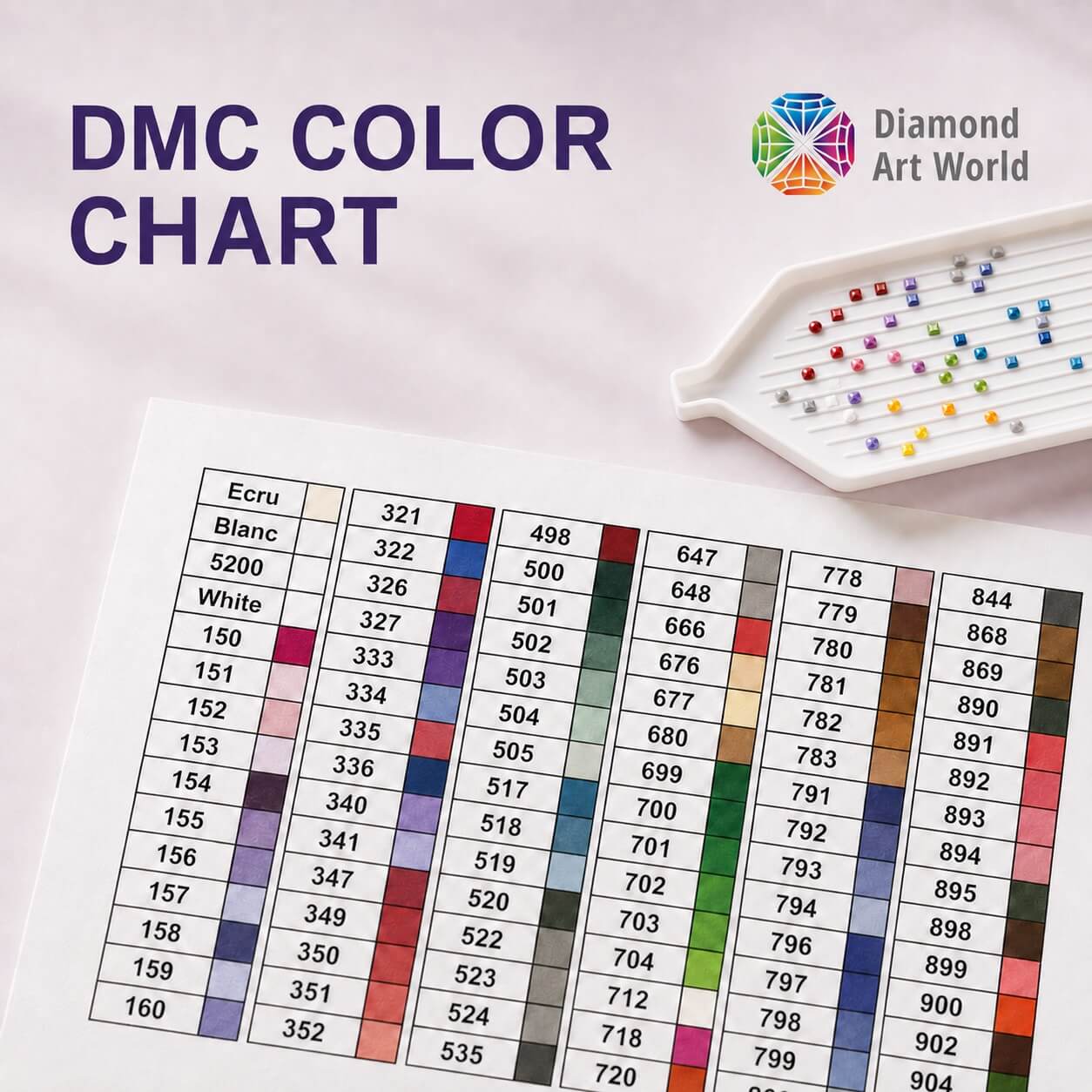
Many people sort all their colors into labeled containers before starting, often called kitting up. It takes time at the beginning but saves searching later, especially on large canvases with 40 or more colors. Between projects, separate storage boxes keep each color apart: see the diamond painting storage collection. If you have more than one canvas in progress, keep each kit's drills and tools in its own box so colors from different projects don't get mixed.
In dry rooms, drills can stick to the tray and to each other. The quickest fixes are in the guide on how to remove static from diamond painting drills.
Protecting the Canvas Between Sessions
When you stop for the day, lay the protective film back over any open adhesive and cover the whole canvas with a clean cloth or a sheet of paper. This keeps dust, pet hair and crumbs off the glue, which is much easier than removing them later. For the same reason, keep food and drinks off the table you work on.
Keep the canvas out of direct sunlight and away from radiators, because heat softens the adhesive. Store it flat if you can. If you need to roll it, roll it loosely with the drills facing out. Rolled inward, the drills press against each other and can pop loose. If pets share your space, cover the canvas every time you leave the table, even for a few minutes. If pet hair or dust gets into the glue anyway, the guide to common diamond art mistakes shows how to remove it.
Frequently Asked Questions
What is the best surface for diamond painting?
A hard, flat and stable surface larger than your canvas, such as a desk, dining table or rigid board. A slight tilt helps your neck, as long as the trays stay flat.
Do I need a light pad for diamond painting?
No, but it helps on dark canvases and with small or similar symbols. With good daylight or a daylight lamp, many people work comfortably without one. More on when it's worth using one is in our diamond painting tips.
Can you do diamond painting in bed?
Yes, on a lap tray or rigid board with a raised edge. Don't work directly on the duvet, because the canvas bends and loose drills are hard to find in the bedding.
Can I leave my diamond painting set up overnight?
Yes, as long as you lay the protective film back over open adhesive and cover the canvas with a cloth. Pour the drills from the trays back into closed containers, so a bump or a pet can't spill them.
What light is best for diamond painting?
Bright, neutral light around 5,000 to 6,500 K, coming from the side opposite your working hand. It shows colors accurately and keeps your hand's shadow off the symbols.