
Diamond painting is relaxing and rewarding, but beginners often run into a few common problems. If you are new to the hobby, it can help to start with a simple kit and learn how the tools and drills work together. Are some of your drills falling off the canvas? Here are eight common diamond painting mistakes and simple ways to fix them.
1. Why Do Diamond Painting Drills Fall Off (and How to Fix It)
Seeing your diamond painting come together one drill at a time is satisfying. But sometimes the drills start loosening and falling off. The adhesive layer on the canvas is what keeps the drills in place, and occasionally it may not be sticky enough.
Pressing the finished area with a heavy book overnight usually fixes loose drills by helping them settle into the adhesive. Leave it overnight so the drills settle deeper into the adhesive. If they still come loose, use a tiny amount of craft glue applied with a toothpick before placing the drill back. Double‑sided tape can also work for small areas. Pro tip: a tiny dot of clear tacky glue (e.g., Mod Podge or similar) applied with a micro brush holds better than standard craft glue without leaving shine. In practice, this usually happens when dust or skin oils reduce tack, so cleaning the area lightly before pressing helps. Another common issue is sealing mistakes—using too much sealant can reduce adhesion or dull the shine.
2. What to Do If Diamond Painting Drills Are Missing
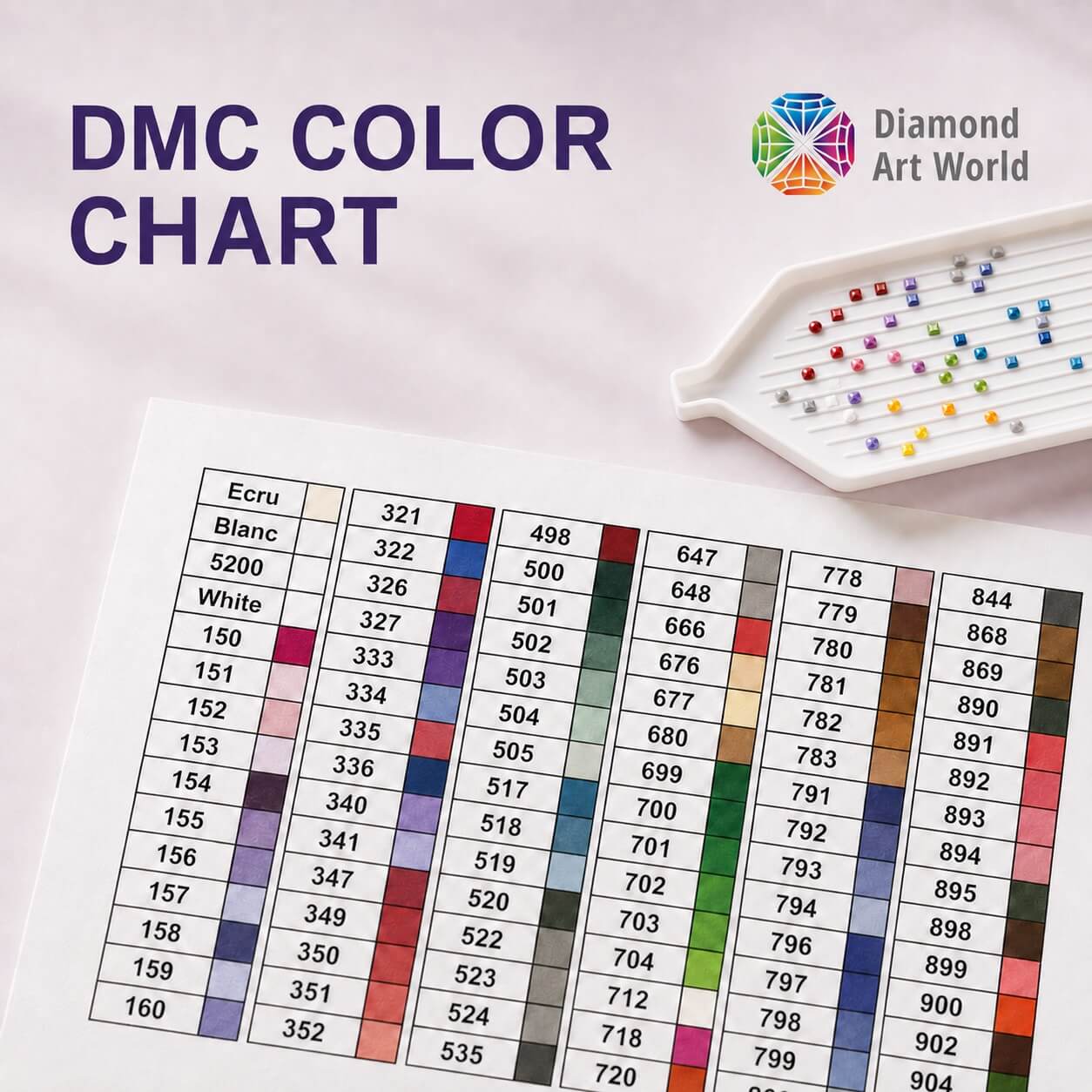
Opening a kit and discovering a missing color can be frustrating. Before starting your project, compare the drills in your kit with the inventory sheet. If a color is missing, contact the seller as soon as possible so the drills can be replaced. At Diamond Art World, we guarantee that any drills missing or accidentally spilled can be resent so you can complete your artwork without worry. From experience, checking the inventory before you start saves a lot of time later.

3. Why Don’t My Drills Match the Canvas (Round vs Square)?
Diamond paintings use either round or square drills. If the shapes in your kit do not match the canvas symbols, double‑check the drill codes. Sometimes kits can contain the wrong type due to production errors. A reliable seller should replace the incorrect drills. This mismatch is rare, but when it happens it’s almost always a packing error, not a user mistake.

4. How Do You Remove the Protective Film Without Losing Stickiness?
The protective plastic film keeps the adhesive clean and sticky. Instead of removing it all at once, peel it back slowly and work on small sections. On larger canvases, you can cut the film into manageable pieces to reveal only the area you are working on. Most beginners rush this step, but working in sections keeps the adhesive much cleaner.

5. How to Fix Spilled Diamond Painting Drills Quickly
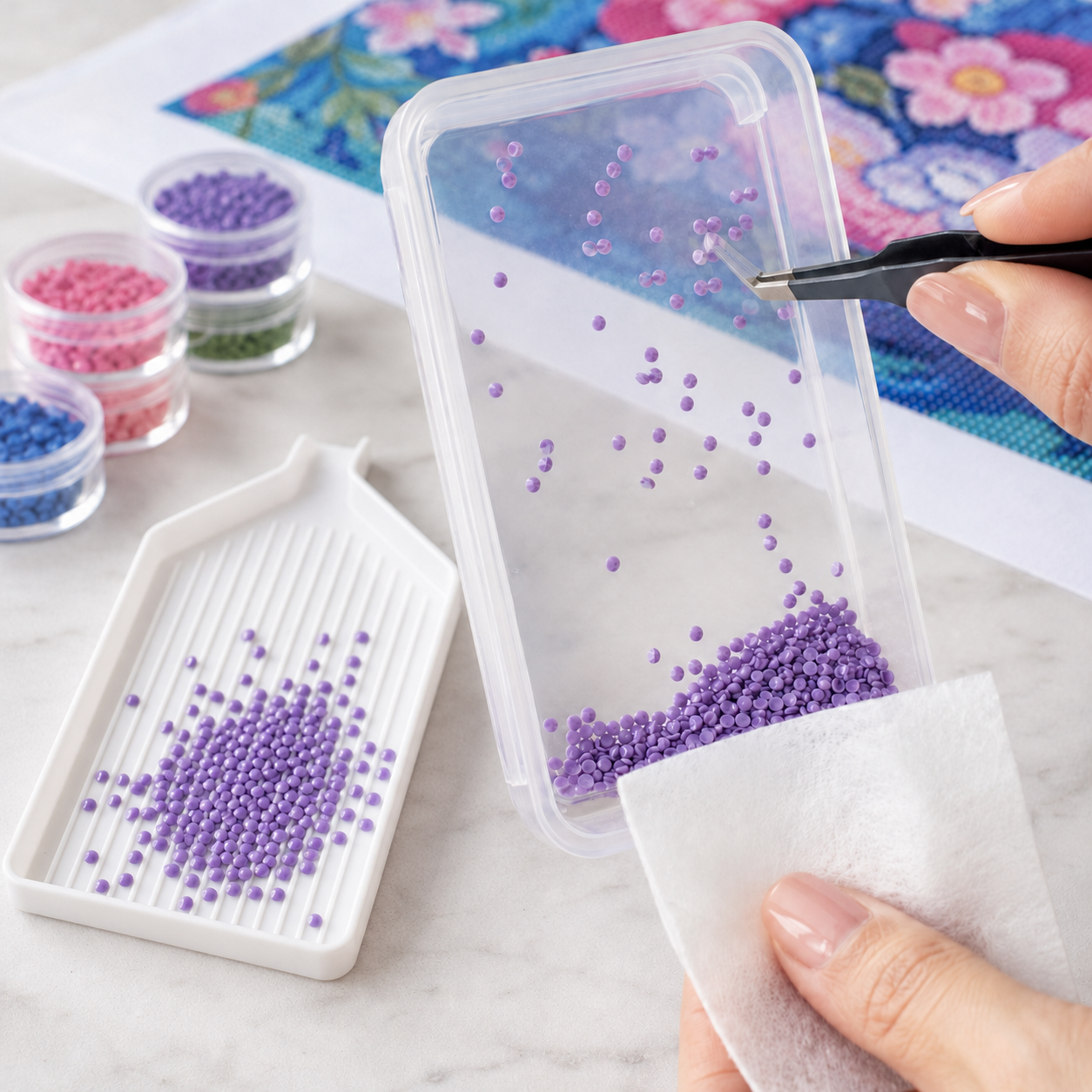
Spilling drills happens to almost everyone. A lint roller is an easy way to collect scattered drills from tables or floors—roll it over the spill and the drills will stick to the adhesive sheet. To prevent spills, work over a tray or use small containers so loose drills stay organized. Using items from the Tools & Accessories range can help keep everything in place while you work. In practice, a tray with a slight lip reduces spills much more than a flat surface. Static can also make drills jump around, especially in dry environments, so lightly wiping tools or trays can reduce this issue.
6. Why Is My Diamond Painting Pen Not Picking Up Drills?
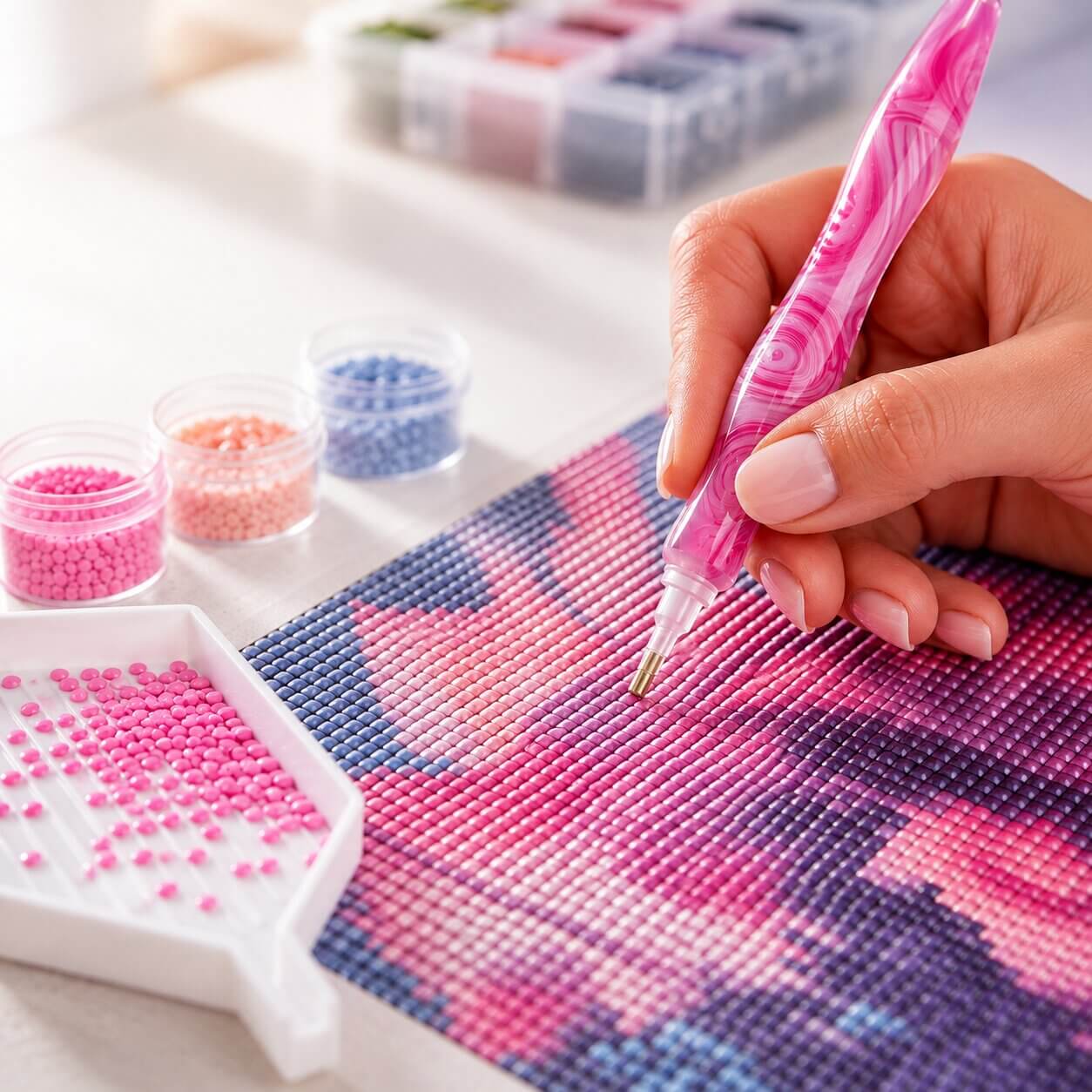
If your diamond painting pen stops working, the wax inside the tip has probably worn out. Press the pen tip into the wax block included in the kit to refill it. The pen should immediately start picking up drills again. If you want an upgrade, a quality diamond painting pen can make placing drills faster and more comfortable. In practice, softer wax works better in warm rooms, while harder wax holds better in cooler conditions. Some users switch to alternatives like blu tack when standard wax stops working well.
7. How to Flatten a Curled Diamond Painting Canvas
Sometimes a diamond painting canvas curled from shipping can make it difficult to work on your project. If a canvas arrives curled from shipping, roll it gently in the opposite direction and place it under a heavy flat object for several hours or overnight. This usually flattens the canvas. From experience, leaving it under weight overnight gives the most consistent results. If the canvas keeps curling back, it is often due to temperature or humidity changes, so keeping it in a stable room helps.
8. How to Keep Diamond Painting Drills in Straight Lines
Keeping drills aligned can be tricky, especially with square drills. This is often called the “popcorn effect,” where small misalignments build up and make the whole image look uneven. Use a ruler, credit card edge, or a diamond painting straightening tool to gently push drills into straight lines. In practice, adjusting rows every few lines prevents bigger alignment issues later. For cleaner lines, lightly run a straightener tool after every 3–4 rows instead of waiting until the end.
9. How Do You Remove a Misplaced Diamond Painting Drill?
Slide the tip of your pen, a pair of tweezers or a toothpick under the edge of the drill and lift it at an angle. Don't dig straight down, because that pulls adhesive off the canvas with the drill. Put the drill back in its tray, press the empty spot lightly with your finger to smooth the glue, and place the correct color. Once a painting is sealed, drills are much harder to remove without damaging the sealer, so check each row against the symbols as you go.
10. What to Do If Paper or Film Is Stuck to the Canvas
Lift the stuck pieces off with tweezers, working slowly from one edge. For tiny fibres, dab the spot with the wax tip of your pen, which picks them up without pulling at the glue. If a larger area is covered, lay the protective film back over it, press it down and peel it again at a low angle. Avoid water, wet wipes and solvents, because they can weaken the adhesive for good. Peeling the film slowly and close to the canvas prevents most of this in the first place.
11. How to Get Pet Hair and Dust Out of a Diamond Painting
Pick single hairs out with tweezers before placing any drills, because drills won't sit flat on top of them. For a dusty patch, touch it lightly with a piece of washi tape, without pressing it into the glue. Keep the protective film on every section you're not working on and cover the whole diamond art canvas between sessions. If you have pets, a tray or raised work surface they can't reach saves a lot of cleaning.
12. How to Fix a Torn or Damaged Diamond Painting Canvas
A small tear near the edge usually doesn't affect the diamond art at all. Turn the canvas over and place a strip of strong fabric tape across the tear on the back to stop it spreading. For creases or dents, follow our guide on how to flatten a diamond painting canvas before placing more drills. If the damage is inside the design area, or the canvas arrived damaged, contact the seller before you start, since a replacement is easier than a repair. Store unfinished canvases flat, or loosely rolled in a tube, to avoid new creases.
Diamond painting is meant to be relaxing and creative, and having the right kits and tools can make the process even smoother. If you want to create something truly personal, you can also try a custom diamond art kit made from your own photo. Most small problems have simple solutions, and once you know them your project becomes much easier to finish. Keep placing those sparkling drills and enjoy watching your artwork slowly come to life. If you're new, our guide on how to start diamond painting can help you avoid beginner mistakes.
FAQ: Common Diamond Painting Questions
Why are my diamond painting drills not sticking anymore?
This usually happens because of dust, oils from your hands, or reduced adhesive over time. Lightly cleaning the surface and pressing drills firmly can restore adhesion.
How do I fix static in diamond painting drills?
Static is common in dry environments and can make drills hard to control. Wiping trays or tools with a slightly damp cloth or using anti-static methods helps reduce the issue.
Why do my diamond painting drills look uneven?
Uneven drills are often caused by small alignment errors building up over time, known as the “popcorn effect.” Regularly straightening rows keeps the final image clean.