
Diamond painting kits mainly use two types of adhesive: poured glue and double-sided adhesive sheets.
Quick Answer
-
Poured glue is more flexible, durable, and easier for repositioning drills
-
Double-sided adhesive is cheaper but more prone to bubbles and wrinkles
-
Most premium kits now use poured glue instead of adhesive sheets
-
Poor adhesive can cause lifting drills, bubbles, or uneven sections later
Most modern kits use poured glue because it stays tacky longer, handles temperature changes better, and makes it easier to reposition drills during the process. Double-sided adhesive is still found in some budget kits, but it can develop bubbles, wrinkles, or lifting over time.
Poured Glue vs Double-Sided Adhesive
Poured Glue
Poured glue is applied directly onto the canvas as a liquid adhesive layer before the protective film is added. From our experience and customer feedback, this type of adhesive is more flexible, less likely to crease during shipping, and easier to work with for larger diamond painting kits.
Most premium diamond painting brands now use poured glue because:
-
the canvas stays sticky for a long time
-
drills can be adjusted more easily
-
the surface is less likely to bubble
-
it handles heat and humidity better
-
folded canvases usually flatten more easily
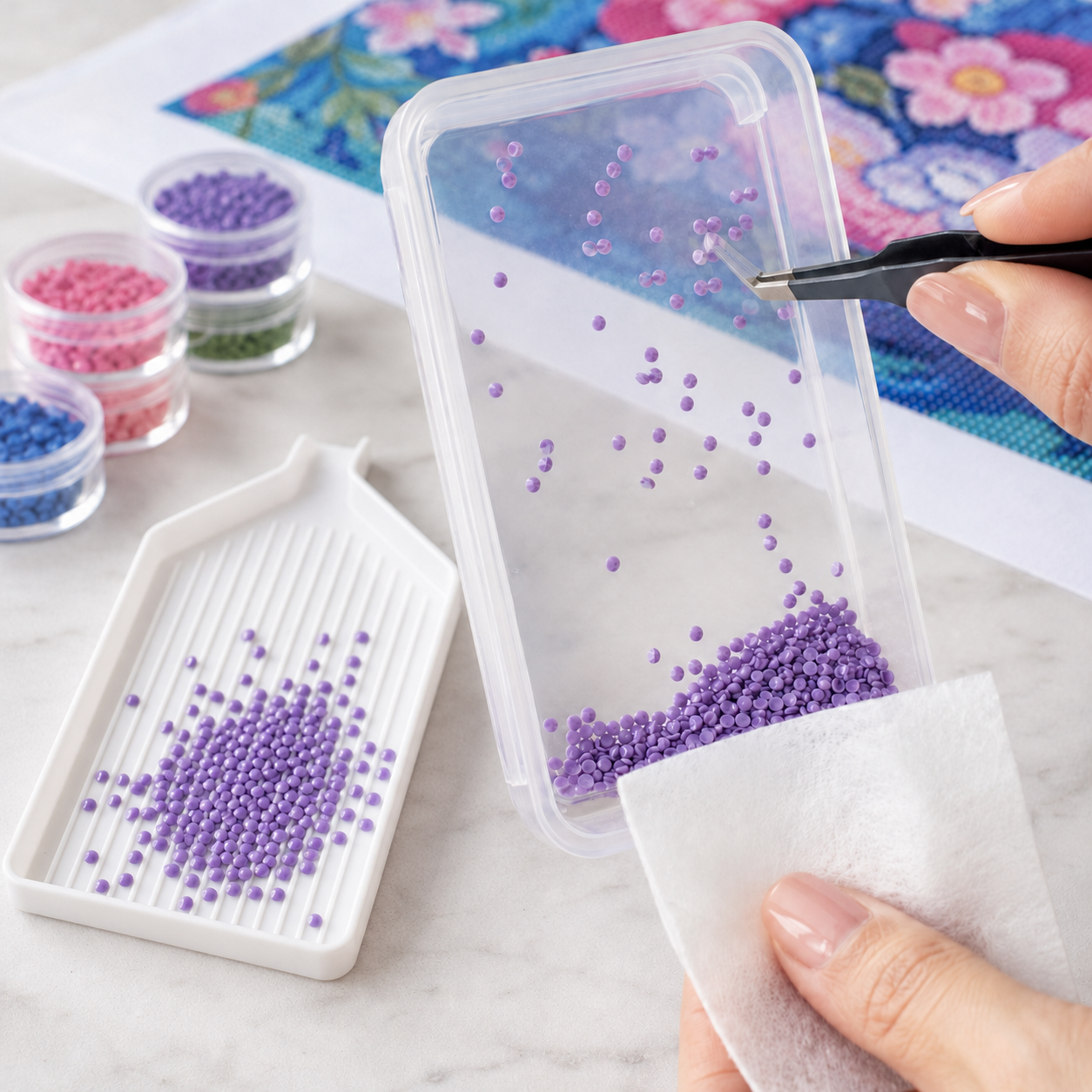
One thing you may notice immediately with poured glue canvases is that they feel softer and smoother while placing drills. If dust or pet hair lands on the adhesive, it can usually be cleaned carefully with tweezers or a baby wipe without permanently damaging the stickiness.
Double-Sided Adhesive
Double-sided adhesive uses a sticky sheet attached to the canvas instead of liquid glue. This method was more common in older or cheaper kits.
While some painters still like the strong initial stickiness, double-sided adhesive has a few disadvantages:
-
air bubbles can appear under the adhesive layer
-
the canvas may wrinkle more easily
-
strong folds are harder to remove
-
drills can sometimes shift if the adhesive separates from the canvas
Reddit users also mention that double-sided adhesive canvases are more sensitive to temperature changes during shipping or storage. In warmer conditions, some canvases can even develop small raised areas where the adhesive sheet slowly separates from the canvas underneath.
Poured Glue vs Double-Sided Adhesive Comparison
| Feature | Poured Glue | Double-Sided Adhesive |
|---|---|---|
| Flexibility | Better | Worse |
| Bubble Resistance | High | Lower |
| Heat Resistance | Better | More sensitive |
| Repositioning Drills | Easier | Harder |
| Common in Premium Kits | Yes | Rarely |
| Wrinkle Recovery | Better | Worse |
Which Adhesive Is Better for Diamond Painting?
For most people, poured glue is the better option. It is more forgiving for beginners, works better on large canvases, and generally lasts longer without adhesive problems.
That is one reason why most modern diamond art kits now use poured glue instead of adhesive sheets. Larger canvases with square drills especially benefit from the smoother surface and better flexibility, since square drills tend to expose alignment issues and uneven adhesive more easily than round drills.

How to Make a Diamond Painting Sticky Again
If drills no longer stick to part of the canvas, first check whether the adhesive is damaged or simply covered with dust, pet hair, or oils from your hands. A dirty surface may feel dry even when the original adhesive layer is still present.
Start by removing visible hair or larger particles with clean tweezers. For fine dust, gently dab the affected area with a slightly damp, alcohol-free baby wipe. Do not scrub the canvas, as this may remove or spread the adhesive. Let the surface dry completely before testing it with a drill.
How to Make Diamond Art Sticky Again Without Glue
Cleaning may restore the stickiness when the adhesive is only dirty rather than damaged. Once the canvas is dry, press one drill lightly onto the affected section. If it stays in place, you do not need to add more glue.
Keep the repaired area covered with the original protective film or release paper until you are ready to work on it. This prevents more dust from settling on the exposed adhesive.
How to Apply Diamond Painting Glue
If cleaning does not restore the stickiness, apply a small amount of diamond painting glue, an adhesive pen, or clear tacky glue. Use a cotton swab, small brush, or precision applicator to spread a very thin and even layer over the affected section.
Avoid applying glue over a larger area than necessary. A thick layer can cover the printed symbols, leave visible residue between the drills, or cause the finished section to sit higher than the rest of the canvas.
Allow the glue to become clear and tacky according to the product instructions before placing the drills. Some craft glues dry permanently rather than remaining tacky, so check that the adhesive is suitable for diamond painting before applying it to the canvas.
What If the Drills Still Do Not Stick?
Press the drills down gently after placing them, but do not force them into wet glue. If several drills continue to lift from the same area, the problem is usually the adhesive layer underneath rather than the drills themselves.
Cover unfinished sections whenever you stop working. Keeping the canvas protected with film or release paper helps the adhesive stay clean and prevents the same problem from returning.
Should You Seal a Diamond Painting?
Sealing is optional for most finished diamond paintings, especially if the drills already sit firmly in place. Some crafters still prefer sealing large canvases that will be framed, transported, or displayed in humid rooms.
Popular sealant options include:
-
diamond painting sealers
-
Mod Podge Super Gloss
-
spray sealants made for crafts
-
clear brush-on acrylic sealers
From our experience, heavy sealants can slightly reduce the sparkle of the drills, so many experienced painters only seal canvases with loose drills or frequently handled sections. If you are unsure which method works best, you can also read our guide on how to seal a diamond painting properly.
Why Some Diamond Painting Canvases Lose Stickiness
The adhesive itself usually lasts for years, but several things can reduce stickiness:
-
dust and pet hair
-
touching the adhesive too often
-
direct sunlight or high heat
-
storing unfinished kits without protective film
-
cheap adhesive layers in low-quality kits
We have also seen customers accidentally remove part of the adhesive when peeling protective film too aggressively, especially near corners. Rolled canvases with poured glue also tend to recover from shipping folds more easily than stiff adhesive-sheet canvases, which is one reason larger projects usually perform better with poured glue canvases.
Does Adhesive Affect Diamond Painting Quality?
Yes. Adhesive quality affects how securely drills stay in place and how easy the canvas feels to work on.
A strong adhesive layer helps prevent gaps, popping drills, and uneven sections later. This becomes even more noticeable on large or detailed canvases with thousands of drills.
If you are choosing your first diamond art project, adhesive quality is one of the details that separates premium kits from cheaper alternatives.
How Long Does Diamond Painting Adhesive Last?
A properly stored diamond painting canvas can stay sticky for several years. Most adhesive problems happen because the protective film was removed too early or the canvas collected dust, hair, or oils from hands during storage.
Keeping unfinished kits rolled carefully and covered with the original protective sheet usually helps preserve the adhesive much longer.
Final Thoughts
Most modern diamond painting kits use poured glue because it is flexible, durable, and easier to work with long term. Double-sided adhesive still exists in some kits, but it is generally less reliable for larger projects.
We often notice that beginners blame drills when sections start lifting or shifting, but in many cases the adhesive underneath is actually the real issue. If you have ever struggled with bubbling canvases, lifting corners, or drills not sticking properly, the adhesive type is usually the reason behind it.