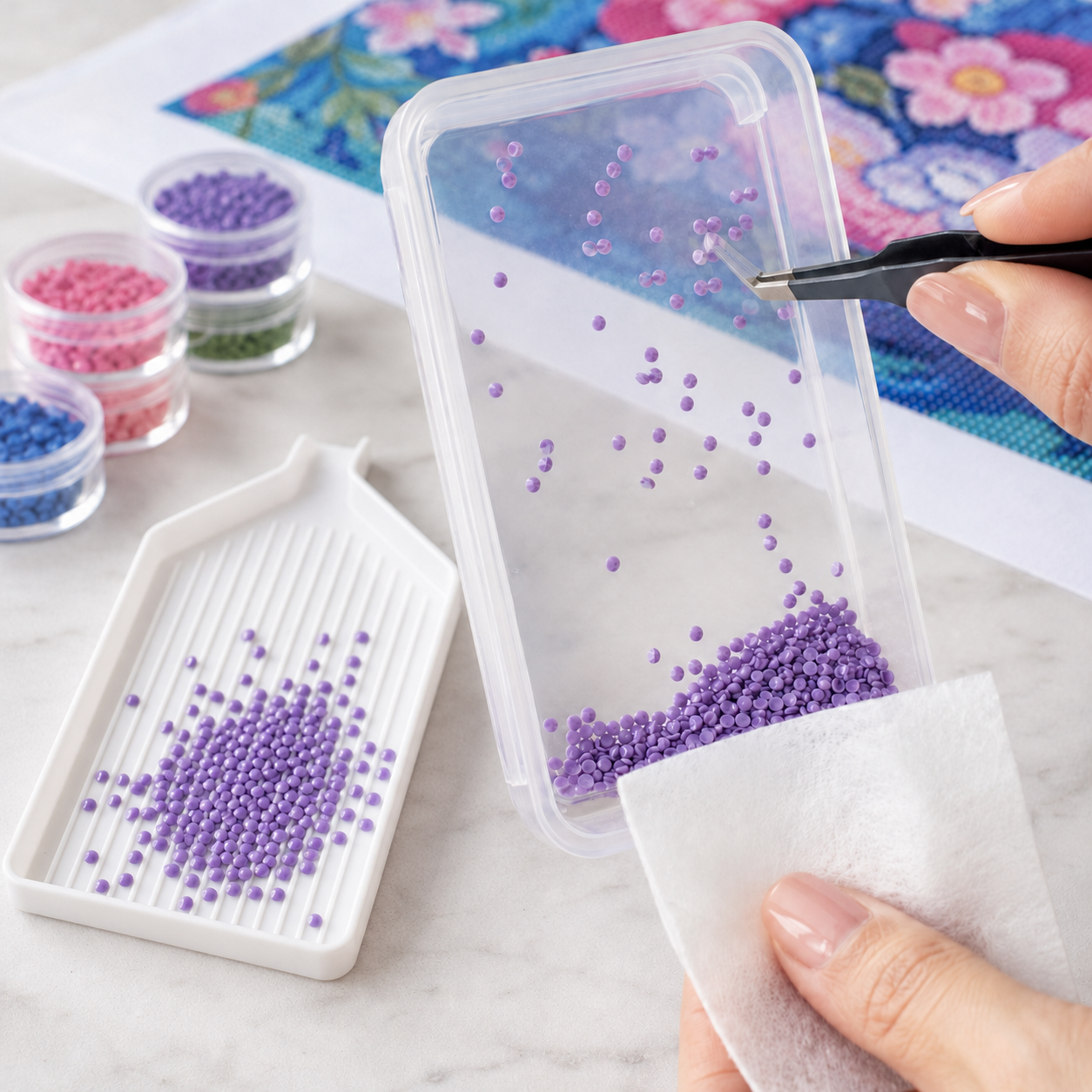

Static diamond painting drills can cling to their bag, stick to a storage container, jump from the tray, or attach themselves to your tools. The quickest solution is to place a small piece of dryer sheet inside the closed bag or container and shake it gently.
This problem can affect round and square drills in any diamond art kit. Static is temporary and does not mean the drills are defective.
How to Tell If Your Diamond Painting Drills Have Static
Statically charged drills may:
- cling to the inside of their bag;
- stick to the sides or lid of a container;
- jump while being poured;
- attach themselves to your fingers or tweezers;
- form loose groups that separate when touched;
- flip repeatedly instead of settling in the tray.
Static develops as resin drills rub against plastic packaging, containers, trays, and one another. It is often worse in dry rooms, during winter, or around synthetic carpets, blankets, and clothing.
Static drills usually separate easily after treatment. Drills that remain physically joined may have excess resin around their edges and need to be separated or replaced.
The problem is also different from weak canvas glue. Static affects loose drills, while damaged or dirty diamond painting adhesives affect how well drills remain attached to the canvas.
Use a Dryer Sheet to Remove Static
A dryer sheet is usually the fastest and easiest way to remove static from diamond painting drills.
- Cut the dryer sheet into small squares.
- Place one piece inside the drill bag or storage container.
- Close the package securely.
- Shake or roll the drills gently for 15 to 30 seconds.
- Remove the dryer sheet with tweezers.
- Test a small number of drills in the tray.
You do not need to shake the bag aggressively. Brief contact with the dryer sheet is often enough to neutralize the charge.
Hold the bag close to the tray when opening it. Strong static can release suddenly and send drills across the table.
Wipe the Tray and Funnel
Sometimes drills leave the bag normally but begin jumping after entering a plastic tray. Wipe the empty tray, funnel, or storage container with a used dryer sheet before adding the drills.
Do not wipe the adhesive canvas. Dryer sheets may leave fragrance or conditioning residue on the sticky surface.
The same methods work with drills supplied in a regular design or a custom diamond art kit.
How to Remove Static Without a Dryer Sheet
Several alternatives can help when a dryer sheet is unavailable.
Use a Barely Damp Cotton Swab
Lightly wipe the inside wall of the drill bag with a barely damp cotton swab. Keep the drills away from the wet area and allow the bag to dry before closing it for storage.
Do not spray water directly onto the drills. Too much moisture may cause clumping or leave droplets inside the container.
Use Rubbing Alcohol Carefully
Some diamond painters lightly dampen a cotton swab with 70% isopropyl alcohol, remove the excess on a paper towel, and wipe the inside of the bag or container.
Do not pour alcohol onto the drills or apply it to the adhesive canvas. Check that the container is compatible with alcohol and let it dry completely before returning the drills.
This should be treated as a backup method rather than the first option.
Try the Freezer Method
Place the sealed drill bag or closed container in the freezer for approximately 30 to 60 minutes.
Keep the package fully sealed. After removing it, allow it to warm closer to room temperature before opening it to reduce the chance of condensation forming inside.
This method may help with strong static, but it is slower than using a dryer sheet.
Reduce Static Around Your Workspace
Touching a grounded metal object before handling the drills may reduce the charge on your hands. An antistatic work mat can also help when static repeatedly affects several colors.
Do not spray an antistatic product directly onto the drills or canvas. Apply it only to a compatible work surface according to the product instructions.
What Not to Put on Diamond Painting Drills
Avoid products that may leave residue, reduce shine, or transfer to the adhesive canvas.
Do not apply these directly to the drills:
- oil;
- liquid fabric softener;
- cleaning sprays;
- baby powder;
- large amounts of water;
- adhesive remover;
- undiluted rubbing alcohol.
Powders may settle between the facets, while oils and cleaning products can make the drills harder to handle.
How to Prevent Static in Diamond Painting
Static may develop during packaging and transport, so it cannot always be prevented. These steps can make it less frequent:
- Keep drills in closed bags or containers.
- Avoid shaking containers more than necessary.
- Pour only a manageable number of drills into the tray.
- Wipe empty trays and funnels with a dryer sheet.
- Keep a small dryer sheet square inside containers that repeatedly develop static.
- Avoid extremely dry conditions in the room.
- Work away from synthetic blankets or table covers when possible.
Pouring fewer drills at once also reduces the risk of spills and mixed colors, two common diamond painting mistakes.
Frequently Asked Questions
How do you get rid of static on diamond art drills?
Place a small piece of dryer sheet inside the closed bag or container and shake it gently. Remove the sheet and test a few drills in the tray.
How do you get static out of diamond art beads?
Diamond art beads are another name for drills. Treat them inside their bag or storage container with a small dryer sheet square.
Why are only some drill colors static?
Individual bags may experience different levels of friction, humidity, and temperature during packaging and transport. One color can therefore be highly charged while the others behave normally.
Can static damage diamond painting drills?
Static itself does not normally damage the drills. The main risk is that they jump from the tray, become mixed with another color, or collect dust after falling.
Does this work with square and round drills?
Yes. Static can affect both shapes because it is mainly caused by the resin material, plastic packaging, friction, and dry conditions.
What if the dryer sheet does not work?
Try wiping the inside of the bag with a barely damp cotton swab or use the sealed freezer method. Also check whether the drills are statically charged or physically fused together.
Once the drills move freely again, continue with the normal process described in how to do diamond painting.