
Diamond painting can last for years without any extra steps, but sealing can add an extra layer of protection. If you already work with diamond painting kits, you may wonder if sealing is worth it and how it affects the final look.
In practice, sealing is simple: press all drills firmly into place, clean the surface, then apply a thin coat of a clear, non‑yellowing sealer and let it dry fully.
Most high-quality diamond painting kits do not require sealing at all if the adhesive is strong and the drills are pressed firmly in place.
In my experience, most well-made kits hold drills very well even without sealing. I usually seal only pieces that will be handled often or displayed without glass, where small movements can loosen drills over time.

Should You Seal a Diamond Painting?
Sealing is not always necessary. Modern canvases use strong adhesive, so finished pieces often stay intact on their own.
Sealing makes sense when:
- some drills feel slightly loose
- the artwork will be displayed without glass
- the surface may be touched or moved often
- you want extra durability for long-term display
If none of these apply, you can safely skip sealing.
What Is the Best Sealer for Diamond Painting or Diamond Art?
The goal is simple: protect the drills without killing the sparkle.
Popular options include:
-
Acrylic sealers – among the best choices because they dry clear and flexible and are easy to apply in thin coats.
-
Water-based polyurethane – often used (e.g., Polycrylic-type finishes) for a strong protective layer without yellowing.
-
Craft sealers – made for diamond art and similar crafts; good for beginners but apply lightly to avoid reducing shine.
Here is a cleaner comparison:
| Sealer Type | Pros | Considerations |
|---|---|---|
| Acrylic sealer | Dries clear, flexible, widely available | Apply thin layers to keep sparkle |
| Water‑based polyurethane | Very durable protective coat | Slightly thicker finish |
| Craft sealers (Mod Podge, etc.) | Easy for beginners, affordable | Some formulas may reduce shine slightly |
From real use, acrylic sealers are the safest option. They are forgiving and keep a good balance between protection and shine. A commonly used option is Minwax Polycrylic, which dries clear, does not yellow over time, and creates a durable protective layer without heavily reducing sparkle.
How to Seal Diamond Paintings Step by Step
If you want a quick answer to how to seal diamond paintings, the process usually follows five simple steps. This clear method helps keep drills secure while preserving the sparkle of your artwork.
-
Clean the surface.
Remove dust, lint, or wax residue from between the drills. Use a soft dry cloth, microfiber cloth, or a fluffy brush so the sealer can spread evenly. -
Ensure the drills are firmly set.
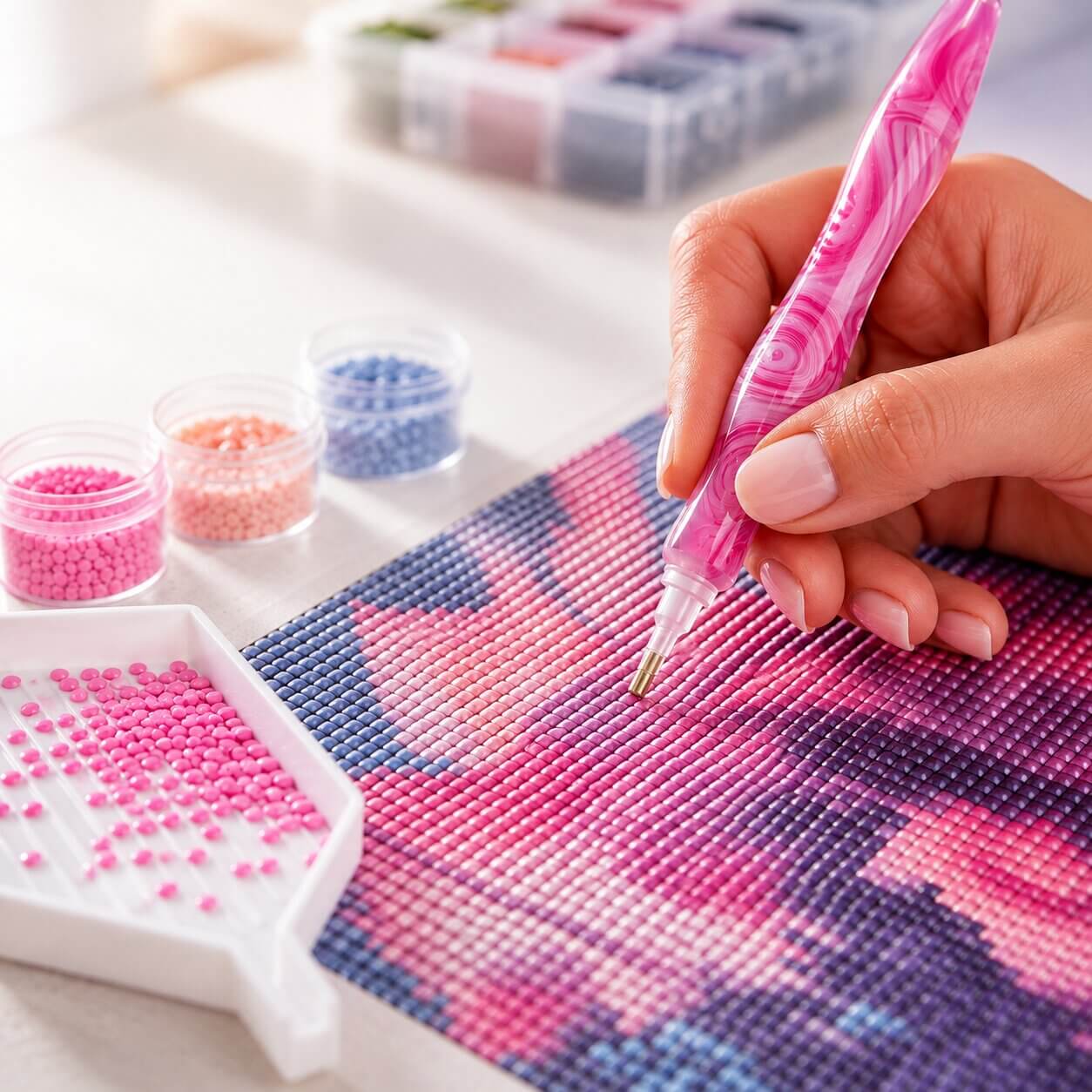
Roll over the entire canvas with a diamond painting roller or similar tool to press every drill into the adhesive. Using a roller from your diamond painting accessories and tools makes this step much easier and helps press every drill firmly into place before sealing. -
Apply the sealer.
Use a soft brush and work in different directions to reach gaps between drills. Avoid fast strokes, as they can create bubbles, and do not overload the brush with too much sealer. -
Allow the painting to dry.
Place the canvas on a flat surface and allow it to dry completely. Depending on the product used, drying usually takes several hours or overnight. -
Remove any excess.
If the sealant looks cloudy or too thick in some areas, gently wipe away excess before it fully dries. Thin layers keep the shine of the diamonds visible.
Once dry, your diamond art painting is ready for framing or display.
Brush vs Spray Sealers
Brush‑on sealers
Brush sealers such as acrylic varnish or Mod Podge create a protective layer that fills the small gaps between drills. This helps secure the diamonds and adds extra durability, especially if the painting will hang without glass or be handled.
In practice, this is the option I choose when I want the piece to last long-term without worrying about drills lifting. The finish is slightly thicker, but much more stable.
Spray sealers
Spray sealers are applied as a light mist over the entire canvas. They are quick to use and usually preserve the natural sparkle better because the layer stays thin.
The trade-off is that sprays do not fill the gaps between drills as effectively, so they offer less structural hold compared to brush-on options.
I tested both spray and brush sealers on finished pieces. Spray kept more shine, but brush provided a stronger hold and felt more secure over time.
Which one should you choose?
Choose brush-on sealers when durability matters, and spray sealers when you want to keep the original shine.
Both options work well if you apply them in thin, even layers. The biggest mistake is using too much product, not the type you choose.
Tips That Actually Make a Difference
- Always apply thin layers (thick coats kill shine)
- Use a soft, quality brush to spread sealer evenly and avoid bubbles
- Avoid foam brushes if possible, as they can create bubbles instead of spreading the sealer evenly
- Test a small corner first to see how it affects shine before doing the whole piece
- Work in good light so you see coverage clearly
- Do not rush drying time
If drills are lifting before sealing, it is often caused by early-stage issues. These are covered in common diamond painting mistakes.
Materials You May Need
| Tool | Purpose |
| Diamond painting roller | Presses drills firmly into the adhesive canvas before sealing |
| Soft brush or microfiber cloth | Removes dust, wax residue, and debris between drills |
| Paint brush or foam applicator | Spreads the sealer evenly across the canvas |
| Lint‑free cloth | Cleans the surface before applying sealant |
| Clear acrylic or water‑based sealer | Creates the protective layer that secures the drills |
When You Don’t Need to Seal
If drills are tight and the piece will be framed behind glass, sealing adds little value. Many of my own finished diamond artworks are not sealed and still look perfect after years.
Does Sealing Reduce Sparkle?
Only if you apply too much.
Thin layers keep most of the shine. Spray sealers preserve it slightly better, while brush sealers trade a bit of sparkle for stronger hold.
Final Thoughts
Sealing diamond painting is optional, not required. Use it when you need extra durability, skip it when the canvas already holds well.
If you are just starting, focus more on proper placement and clean work. That has a bigger impact than sealing itself.
FAQ
Do you have to seal diamond paintings?
No. Many diamond paintings hold drills securely without sealing, especially when using high‑quality adhesive canvases.
Does sealing diamond art reduce sparkle?
If applied correctly in a thin coat, most clear sealers keep the shine of the drills visible.
What is the best sealer for diamond painting?
Clear acrylic sealers and water‑based polyurethane are among the most popular options because they dry transparent and protect the artwork effectively.