
Finished diamond paintings can be sold as wall art, gifts, or custom commissions. Buyers usually care more about the subject, size, condition, and presentation than the number of hours spent placing drills.
Before listing artwork made from diamond painting kits, correct visible flaws, check the source of the design, calculate the full cost, and decide whether local pickup or shipping makes more sense. Describe it as a hand-completed physical artwork, not as an original illustration you designed.
How to Sell a Finished Diamond Painting
To prepare a completed canvas for sale:
-
Replace missing drills and straighten uneven rows.
-
Remove dust, hair, wax residue, and loose fibers.
-
Check the source of the design and any relevant seller terms.
-
Decide whether to seal or frame the artwork.
-
Calculate your minimum acceptable price.
-
Photograph the full piece and close-up details.
-
Choose a suitable online or local sales channel.
-
Plan the packaging before publishing the listing.
Missing drills, damaged edges, and unclear information about the original design should be addressed before the artwork is offered for sale.
A finished diamond painting can also be framed, gifted, stored, or reused instead of sold.
Is There a Market for Finished Diamond Paintings?
Finished diamond art does sell, although some subjects attract more buyers than others. A customer must like the image, colors, dimensions, and style while also having a suitable place to display it.
Potential buyers include people who enjoy the appearance of diamond art but do not want to complete an entire kit. Others may be searching for ready-to-hang decor, a personal gift, or artwork connected to a specific memory.
Subjects with broad appeal include pets, wildlife, flowers, landscapes, religious images, seasonal scenes, local landmarks, and family or wedding portraits. A niche design can still sell, but it may take longer to find the right buyer.
Large canvases can also be more difficult to sell. They need more wall space and often cost more to frame, package, and ship.
Test demand with a few strong pieces before creating a large inventory. Track which subjects, sizes, and prices receive views, questions, or offers.
What Types of Diamond Art Are Easier to Sell?
Generic pieces tend to perform best when the image works as conventional wall decor. Flowers, animals, landscapes, and seasonal scenes are easier for buyers to imagine in their homes than designs connected to a narrow interest.
Small and medium canvases are also easier to frame, collect, and ship. A large detailed canvas may justify a higher price, but fewer buyers will have room for it.
Full-drill artwork often looks more complete than a partial-drill design because the entire image area is covered. Square drills create a continuous mosaic surface, while round drills leave slightly more space between individual pieces.
The drill shape alone will not determine whether the artwork sells. Accurate placement, clean borders, balanced colors, and an appealing image usually matter more.
Prepare the Diamond Painting for Sale
Inspect the canvas under bright, even light. Pay particular attention to the corners, borders, and sections that contain similar colors.
Check for:
-
Missing, loose, or raised drills
-
Crooked rows and uneven gaps
-
Dust, hair, fibers, or wax residue
-
Exposed adhesive and damaged canvas edges
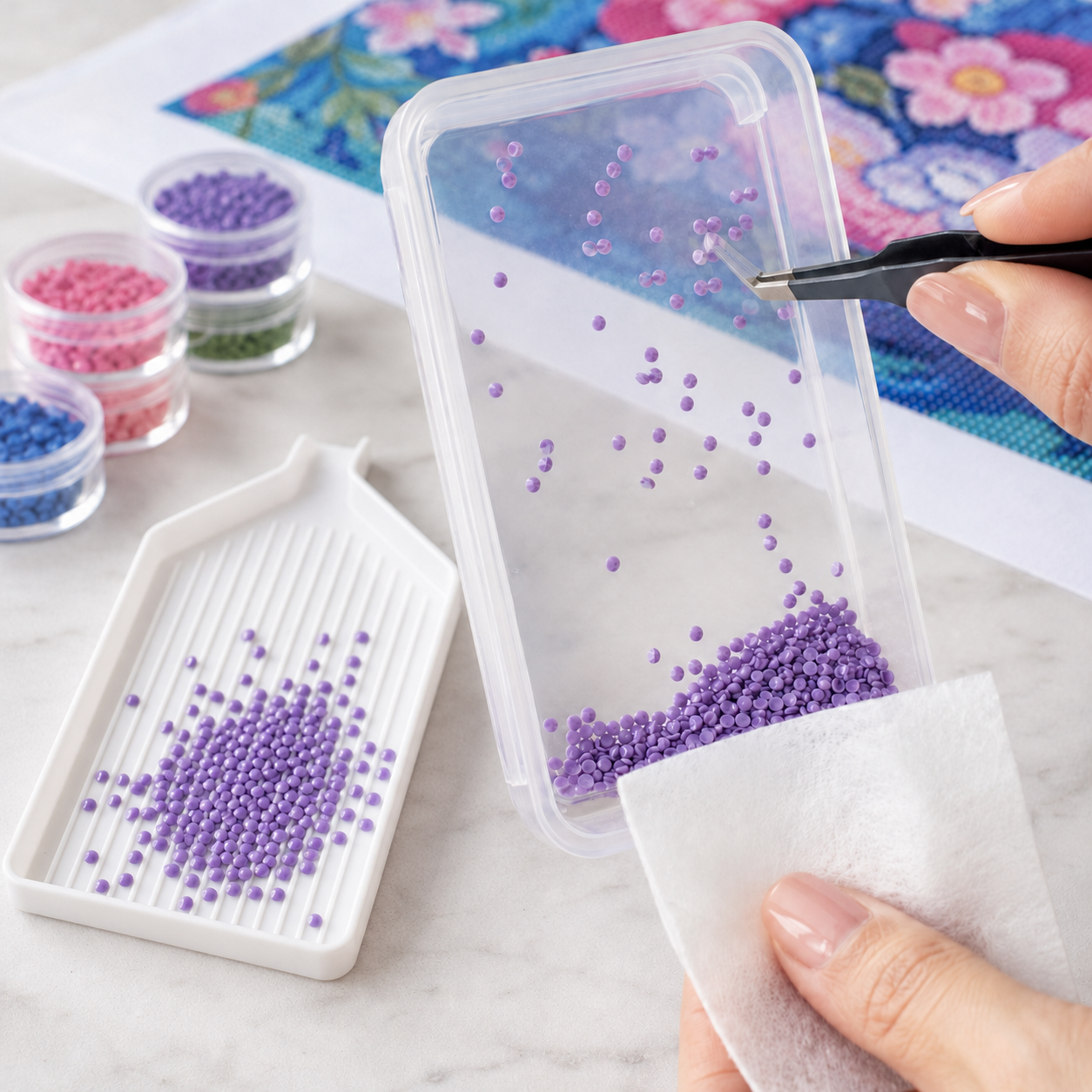
Use tweezers or a straightening tool to correct misplaced drills. A roller can press the drills into the adhesive, but cover the surface first and avoid excessive force.
Remove loose dust with a clean, soft brush. Do not soak the canvas or apply household cleaning products.
Repair visible defects before taking photographs. Any flaw that cannot be fixed should appear clearly in both the listing description and images.
Should You Seal Diamond Art Before Selling It?
Not every finished diamond painting needs to be sealed.
Sealer may help when the artwork will be shipped, handled frequently, stored for a long period, or displayed without protective glass. It can secure loose drills, but a thick coating or unsuitable product may reduce the sparkle.
A securely framed canvas behind glass or acrylic may not need additional sealing because the surface already has protection against dust and direct contact.
The method should match the way the piece will be displayed. Different options for sealing a diamond painting can secure the drills without covering them too heavily.
Allow the sealer to cure completely before framing or packing the canvas.
Should You Sell Diamond Art Framed or Unframed?
A frame makes the canvas look more like finished wall decor and hides unfinished edges. It also helps a buyer understand how the artwork will appear in a room.
However, framing increases the size, weight, and cost of the package. Glass can break during shipping, and the buyer may prefer a different frame style. For larger artwork, a frame can make domestic or international delivery impractical.
Framed artwork is often better suited to local pickup. An unframed canvas costs less to ship and allows the buyer to choose the final presentation.
State clearly whether the frame is included. List both the image dimensions and the full outside measurements of the frame.
The chosen frame should protect the canvas without pressing against raised drills. Methods for framing a diamond painting vary according to the canvas border, size, and type of glazing.
Can You Legally Sell Finished Diamond Paintings?
Buying a diamond painting kit does not transfer ownership of the original illustration or its copyright. It does not give you permission to make prints, reproduce the image on other products, or claim that you designed the underlying artwork.
Selling one completed physical canvas is different from reproducing multiple copies. Copyright law, marketplace policies, and manufacturer terms can still vary.
Check the source of the design and review the manufacturer’s terms before selling it. Identify the kit manufacturer and original artist when known, and do not claim that you created the illustration. Extra care is needed with logos, celebrities, movie characters, and other protected artwork.
The completed image should not be reproduced as prints or placed on other products without suitable permission.
For custom work, use a photograph that you or the customer has the right to use. An image being publicly available online does not make it suitable for commercial use.
Contact the manufacturer or rights holder when the permitted use is unclear. This is general information rather than legal advice.
How Much Should You Charge for Diamond Art?
There is no standard price for a finished diamond painting. Start by calculating the minimum amount that would make the sale worthwhile.
Use this formula:
Kit cost + frame + materials + packaging + selling fees + payment for your work
Add shipping separately or include it in the listed price. Account for the kit, replacement drills, sealing or mounting materials, packaging, marketplace fees, delivery, insurance, and the value of your time.
A basic calculation might look like this:
|
Cost |
Amount |
|
Diamond painting kit |
$30 |
|
Frame |
$20 |
|
Sealer and materials |
$5 |
|
Packaging |
$10 |
|
Estimated selling fees |
$8 |
|
Desired payment or profit |
$27 |
|
Minimum selling price |
$100 |
This calculation shows the price needed to reach your target. It does not guarantee that buyers will pay that amount.
Compare the result with similar wall art and completed diamond paintings. When the likely selling price is lower, you can offer the canvas unframed, arrange local pickup, reduce optional expenses, accept a smaller return, or keep the artwork.
Avoid pricing the piece by multiplying every hour by a professional hourly rate. A canvas may take dozens of hours to complete, but buyers usually compare it with other finished wall decor rather than calculating the time spent on each drill.
Where Can You Sell Finished Diamond Paintings?
Facebook Marketplace and Local Groups
Local platforms work well for large or framed artwork. Buyers can inspect the sparkle, colors, and condition in person, while sellers avoid oversized packaging and shipping risks.
Use clear dimensions and specify whether the piece is framed, sealed, and ready to hang.
Craft Fairs and Community Markets
Craft fairs allow buyers to see diamond art under real light, which photographs often fail to reproduce accurately.
Offer several sizes and price levels. Smaller pieces provide a lower-cost option, while one larger framed canvas can draw attention to the display. A completed personalized portrait can also show visitors what a custom order might look like.
Etsy, eBay, and Other Marketplaces
Online marketplaces can reach more buyers but add fees, competition, packaging requirements, and platform rules.
They work best for artwork with a recognizable subject, accurate photographs, manageable shipping dimensions, and a price that covers packaging and seller fees.
Avoid vague titles such as “Finished Diamond Painting.” Include the subject, dimensions, framing status, and condition.
Social Media and Direct Sales
Facebook, Instagram, Pinterest, TikTok, and relevant hobby groups can help you show completed work and receive direct inquiries.
Progress photographs and short videos show that the canvas was completed by hand. They also help potential customers understand the work involved.
Use written prices, payment records, and clear terms for direct orders. Follow the promotional rules of each group or community.
How to Photograph Diamond Art for Sale
Reflective drills can create glare or make the surface look flat. Photograph the canvas in bright, indirect daylight and avoid camera flash or heavy filters.
Include:
-
A straight image of the complete artwork.
-
A close-up and angled image showing placement and sparkle.
-
Photographs of the borders, corners, and frame.
-
A scale photo and clear close-ups of any defects.
Keep the colors realistic. Heavily edited photographs may create disputes if the delivered piece looks darker or less saturated.
Use a simple background without clutter so the buyer can judge the artwork itself.
How to Write a Diamond Art Listing
A clear title can follow this structure:
Finished [Subject] Diamond Painting – [Size] – [Framed or Unframed] Diamond Art
For example:
Finished Floral Diamond Painting – 16 × 20 Inches – Framed Wall Art
The listing should include:
-
Subject, exact dimensions, and condition
-
Framed or unframed status and whether it is ready to hang
-
Round or square drills and full or partial coverage
-
Sealing, visible flaws, and the origin of the design
-
Shipping and local pickup options
Describe the piece as “hand-completed from a diamond painting kit” rather than implying that you created the original illustration.
A suitable disclosure is:
Hand-completed from a [Brand] diamond painting kit. The underlying design is credited to [Artist, if known]. This listing is for the completed physical artwork only.
Precise descriptions reduce misunderstandings about the condition, dimensions, and origin of the piece.
How to Ship a Finished Diamond Painting
Plan the packaging before setting the price. Unexpected parcel dimensions or weight can remove most of the profit from a sale.
Shipping an Unframed Canvas
Cover the drill surface with a clean, non-stick protective sheet. Place the canvas between rigid boards to prevent bending and pressure.
Flat shipping is generally safer than tight rolling. For a large canvas that must be rolled, use a wide tube and avoid compressing the drills.
Protect the outer package against moisture.
Shipping a Framed Diamond Painting
Protect the corners before wrapping the full frame. Use a sturdy box and enough padding to prevent movement.
Do not press packaging directly against exposed drills. Acrylic glazing is usually lighter and less likely to break than glass.
Use tracking and consider insurance for higher-value pieces. Photograph the packed artwork before dispatch in case the parcel is damaged.
International Shipping
Check customs forms, carrier size limits, tracking, and possible import charges before accepting an international order.
State who is responsible for customs duties and taxes. Large framed pieces may cost more to ship than the artwork itself.
Custom Orders vs. Selling Completed Pieces
A pre-made canvas needs to find someone who likes its exact subject, colors, dimensions, and presentation. A commission begins with an interested customer and an approved image.
A practical custom-order process is:
-
Ask the customer to submit the photograph.
-
Confirm that they have permission to use it.
-
Check the image quality, contrast, and important details.
-
Agree on the canvas size, drill shape, frame, price, and deadline.
-
Collect a deposit that covers the kit and non-refundable costs.
-
Get approval for the crop or preview.
-
Order and complete the canvas.
-
Send final photographs before delivery.
-
Collect the remaining payment.
Pet portraits, family photographs, weddings, memorials, homes, and meaningful places work well because the artwork already has a specific recipient.
A custom diamond painting can be produced from the customer’s photograph. Images containing several people, small faces, or detailed backgrounds usually require a larger canvas.
Do not confirm a deadline until you have allowed for production, delivery, completion, corrections, framing, and final shipping.
Can Selling Diamond Art Be Profitable?
Finished diamond art can cover its costs and generate extra income, but not every completed canvas will sell at a profitable price.
Keep records of the kit cost, materials, fees, packaging, delivery, and time spent. A deposit should cover the non-refundable expenses of a commission before work begins.
Set a realistic monthly order limit. Completing one canvas as a hobby is different from producing several pieces to fixed deadlines. Too many orders can lead to rushed work, delays, and inconsistent quality.
Regular sales may also create tax, registration, and consumer obligations. Check the rules that apply where you live.
Mistakes to Avoid
Disclose missing drills, damaged edges, and uneven sections before the buyer pays. Check the packed shipping cost before framing a large canvas, and do not use copyrighted images without suitable permission.
For commissions, agree on the image, dimensions, price, deadline, deposit, and final payment in advance. Limit the number of orders to what you can complete at a consistent standard.
Frequently Asked Questions
Can I sell a finished diamond painting?
Many completed diamond paintings can be sold as physical pieces. Check the origin of the design, the manufacturer’s terms, and the marketplace rules before listing it.
Where is the best place to sell diamond art?
Facebook Marketplace and local craft events suit large or framed pieces. Etsy, eBay, and similar platforms can reach more buyers but add fees and shipping requirements.
How much is a finished diamond painting worth?
Its value depends on the image, dimensions, condition, presentation, demand, and delivery cost. Calculate the full cost first, then compare it with similar finished wall art.
Do finished diamond paintings sell on Etsy?
They can sell when the listing complies with Etsy’s current policies. Results depend on the subject, photographs, title, price, competition, and shipping cost.
Should I seal a diamond painting before selling it?
Sealing may help when the canvas will be handled, shipped, or displayed without protective glazing. A piece framed behind glass or acrylic may not need it.
Can I get paid to complete diamond paintings for other people?
Yes. Agree on the photograph, size, price, deadline, deposit, and final payment before ordering the kit.
Should I mention the kit brand in the listing?
Identify the manufacturer and original artist when known. Make it clear that you completed the physical kit but did not create the underlying illustration.
Can you sell diamond art internationally?
Yes, although customs requirements, import charges, tracking, insurance, and package limits should be checked before the order is accepted.
Are full-drill diamond paintings easier to sell?
Full-drill canvases may look more complete, but the subject, condition, placement quality, presentation, and price have a greater influence on buyer interest.
Final Thoughts
Finished diamond art is easier to sell when the subject has a clear audience, the condition is documented, and the price includes all costs. Local pickup works well for large framed pieces, while custom commissions reduce the risk of completing artwork without an interested buyer.