
Diamond painting offers several real, practical benefits:
-
reduces stress and mental overload
-
improves focus and patience
-
supports mindfulness
-
builds creative confidence
-
trains fine motor skills
-
gives a strong sense of completion
Diamond painting helps mainly by improving focus, reducing stress, and creating a steady, repetitive rhythm that calms the brain without requiring much effort. If you’re new to diamond painting, starting with a simple kit makes the first experience much easier.

Why Is Diamond Painting So Popular?
Diamond painting combines simple mechanics with visually satisfying results. You place small resin drills onto a coded canvas and gradually see an image come together. That mix of low difficulty and high reward is what keeps people coming back.
It works for beginners but still holds attention on larger, more detailed canvases. The process is predictable, but the result always feels rewarding. If you want a step-by-step walkthrough, check how to do diamond painting before starting your first project.
1. Stress Relief and Mental Reset
One of the strongest benefits of diamond painting is how quickly it helps you disconnect. After 15–30 minutes, most people stop checking their phone and settle into a calmer rhythm.
The repetitive placement of drills creates a steady pace that reduces mental noise. It’s not just relaxing—it gives your brain a break from constant input. Many people use it specifically to manage anxiety after work or before sleep.
Repetitive activities like this are often linked to lower cortisol levels and a calmer mental state.
2. Mindfulness Without Trying Too Hard
Diamond painting naturally pulls your attention into the present moment. You focus on colors, symbols, and placement instead of overthinking daily tasks.
Unlike meditation, you don’t have to “try” to be mindful. It happens automatically as you work through the canvas. The process often creates a meditative state similar to puzzles or other repetitive crafts.
3. Better Focus and Attention Span
Working on a larger canvas trains your ability to stay focused on one task. You follow patterns, repeat actions, and avoid distractions.
Many people notice improved concentration after a few sessions, especially if they struggle with short attention spans. Compared to coloring books, diamond painting usually requires more sustained focus, but less decision-making.
4. Brain Stimulation (Puzzle-Like Activity)
Diamond painting keeps your brain engaged through simple, repeated decisions—matching symbols, organizing colors, and planning small sections.
It works similarly to puzzles: light cognitive effort, repeated over time. This keeps the brain active without overload and complements focus training rather than duplicating it.
In occupational therapy, simple repetitive tasks are often used to keep the brain engaged without stress. The key is consistency, not difficulty.

5. Fine Motor Skills and Hand Control
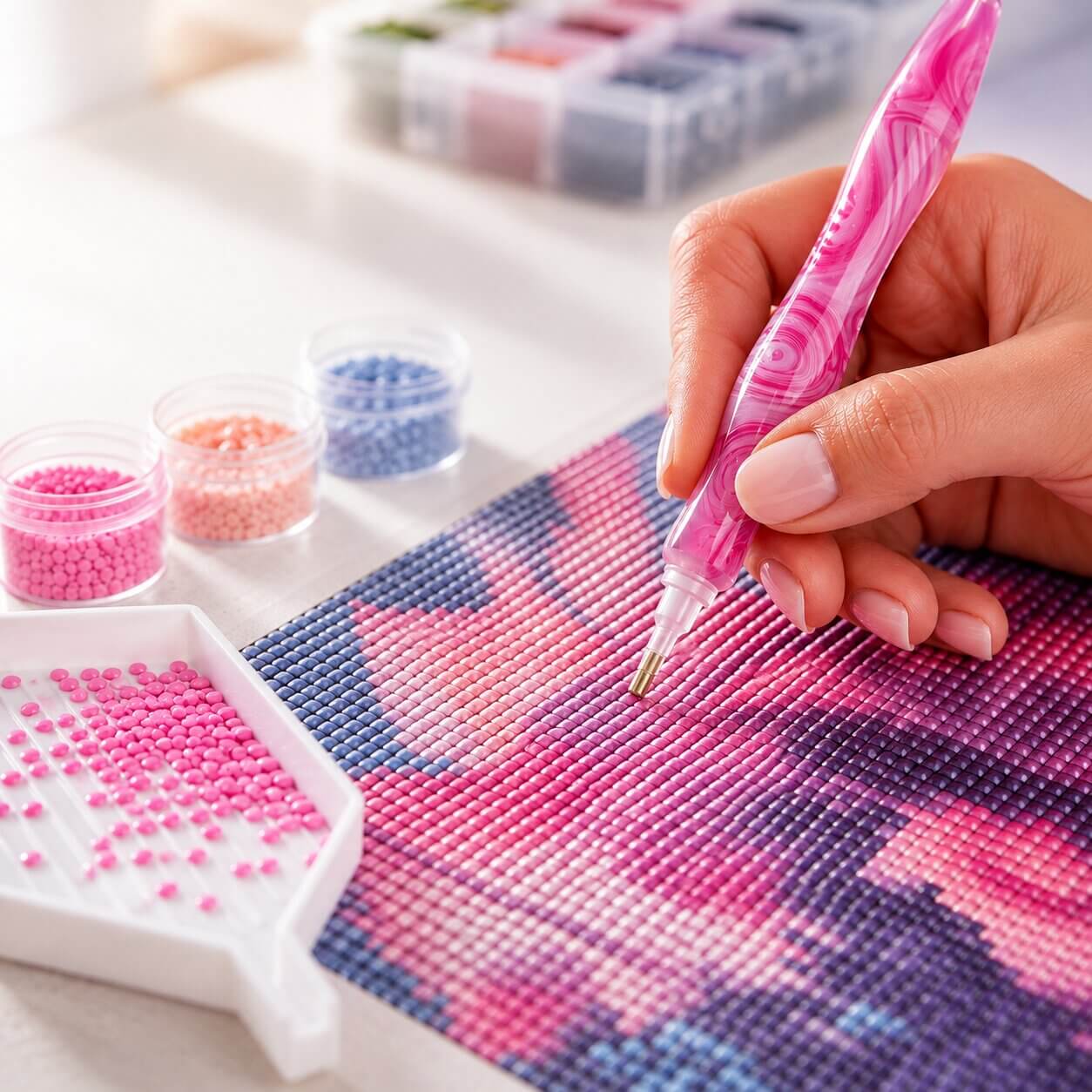
Picking up and placing small drills improves precision in your fingers and hands. Over time, movements become smoother and more controlled.
This carries over into everyday tasks that require steady hands or detail work.
6. Creative Confidence Without Pressure
You don’t need artistic skill to finish a piece. That’s what makes it powerful.
Finishing your first canvas often changes how you see yourself—you go from “not creative” to someone who can complete artwork. Many beginners start with themed designs like butterfly diamond painting kits, which are easier to follow and visually rewarding.
7. Sense of Progress and Completion
Diamond painting is built on visible progress. Each section you finish gives immediate feedback.
That steady progress is motivating, especially compared to hobbies where results take longer to appear. Completing sections can trigger a small dopamine response, which makes the activity feel rewarding and keeps you coming back.
This small reward loop is similar to what makes puzzles or simple games satisfying.

8. A Structured Way to Relax
Some people don’t relax well with unstructured free time. Diamond painting gives you something to do without being demanding.
It’s relaxing, but still feels productive. That balance is why many people stick with it long-term.
Structured creative activities are often recommended by therapists because they reduce decision fatigue while still keeping the mind engaged.
9. Social and Community Aspect
Diamond painting has a strong community. Online groups, forums, and sharing finished work are a big part of the experience.
You can keep it solo or connect with others—it works both ways.
10. Decorative Art With Personal Value
At the end, you don’t just have a finished piece—you have something you made yourself.
Whether you hang it, gift it, or store it, it carries more value than something bought ready-made. That personal connection is what makes people start another kit right after finishing one.
Many people use diamond painting as a simple evening routine instead of scrolling on their phone, which makes the finished result feel even more rewarding.
Can Diamond Painting Help With Dementia or Alzheimer’s?
While diamond painting is not a treatment, similar activities are often used in memory care settings. Simple, repetitive creative tasks can help keep the brain active and provide a sense of calm.
For people with early-stage dementia, activities like puzzles, coloring, or crafts may support cognitive engagement and reduce agitation. The key benefit is maintaining routine and gentle mental stimulation.
Diamond painting fits well here because it is structured, predictable, and does not require complex decision-making, making it accessible even with reduced attention or memory.
Caregivers often look for activities that are calming, easy to start, and provide visible results—diamond painting checks all three boxes.

FAQ
Is diamond painting good for anxiety?
Yes, many people use diamond painting to reduce anxiety because the repetitive motion and clear structure help calm the mind and shift attention away from stressful thoughts.
How long should you do diamond painting daily?
Even 20–30 minutes is enough to feel the benefits. Most people notice better focus and relaxation within a single session.