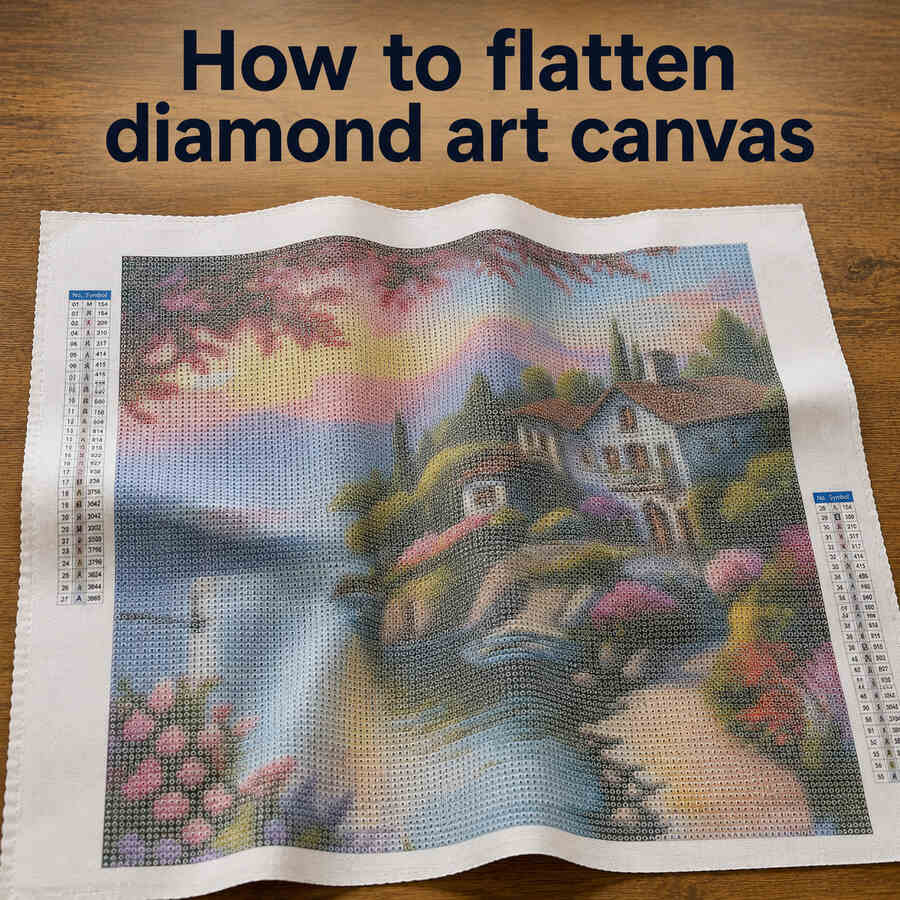
Diamond painting looks simple at first—but most beginners are surprised how long it actually takes and how addictive it becomes after a few sessions.
Diamond painting (also called diamond art) is a popular DIY craft where you place tiny resin “diamonds” onto a sticky, symbol-coded canvas to form a finished image. It combines elements of paint by numbers and cross-stitch, but instead of paint or thread, you place sparkling drills to build the design.
The canvas is pre-printed with symbols, and each symbol matches a color, so you just follow the pattern and build the image piece by piece. Most people start with a ready-made kit, which includes everything needed to finish the artwork.

How diamond painting actually works
It’s a simple step-by-step process:
-
Peel back a small section of the protective film on the canvas. Work in small areas to keep the adhesive clean and dust-free.
-
Pour a small amount of diamonds into the tray. Shake the tray gently so the drills flip flat side down for easier pickup.
-
Dip the pen tip into wax so it can pick up the drills. Refresh the wax when it stops gripping properly.
-
Pick up one diamond with the pen. Keep the pen vertical to avoid dropping or misaligning the piece.
-
Place it onto the matching symbol on the canvas. Lightly press to secure it without shifting nearby drills.
-
Repeat section by section until the image is complete. Move systematically to keep rows straight and progress visible.
It sounds repetitive, and it is—but that’s exactly why people enjoy it. After a few minutes, you stop thinking about the steps and just focus on placing diamonds in a rhythm.
From experience, the first session feels slower than expected. Many beginners assume they will finish quickly, but even small canvases take several hours. Once you get used to the symbols and movement, speed improves naturally.
What’s inside a diamond painting kit
A standard diamond painting kit usually includes:
-
Pre-printed adhesive canvas with symbols
-
Color-coded diamond drills (round or square)
-
Diamond pen (applicator tool)
-
Wax pad to pick up drills
-
Plastic tray for sorting diamonds
Some kits also include extras like tweezers or multi-placer tools. You may also see terms like full drill (the whole canvas is covered) and partial drill (only parts are filled), which affect the final look and time needed.
If you want to try it with your own image, you can turn a photo into a custom version using a custom diamond painting kit.
Round vs square diamonds (what’s better?)
There are two main types of drills, and the choice affects the final look and difficulty.
Round diamonds are easier to place and more forgiving. They are best for beginners because alignment doesn’t need to be perfect. The finished image has small gaps, but they are usually not noticeable.
Square diamonds fit edge-to-edge with no gaps, creating a more detailed and “full” look. However, they require more precision. If one piece is slightly off, the whole row can look uneven. Beginners often find them slower at the start.

What diamond painting feels like (real talk)
This is the part most guides skip.
Diamond painting is repetitive, but in a good way. After a while, it becomes automatic and calming. Many people compare it to zoning out while doing something with your hands. You are focused, but not stressed.
At the same time, it is not always perfect:
-
Large color blocks can feel boring
-
Straight lines are harder than they look
-
Wax runs out faster than expected
-
Finishing a big canvas takes longer than most people think
Based on real user experiences, beginners often say the same things: it feels easier than expected, but much slower; it’s relaxing once you get into it, but can feel tedious in the beginning; and the first finished piece is surprisingly satisfying even if it’s not perfect.
Knowing this upfront helps avoid frustration.
Is diamond painting hard?
For most people, diamond painting is not hard to learn, but it can test your patience. The basic steps are simple and repetitive, so you don’t need any artistic skill to get started.
What beginners often underestimate is the time and focus required. Small sections feel easy, but completing a full canvas—especially a larger one—can take many hours or even days.
The difficulty also depends on your setup. Round diamonds are easier and faster, while square diamonds require more precision. Complex designs with lots of detail can feel overwhelming at the start.
In practice, most people find it easy to begin, slightly frustrating in the first few sessions, and then much more enjoyable once they get into a rhythm.
Common beginner mistakes
Most beginners make the same few mistakes:
-
Peeling the whole protective film at once → dust sticks to the canvas
-
Mixing diamond colors → hard to fix later
-
Pressing too hard with the pen → diamonds shift out of line
-
Starting with a large, complex design → leads to burnout
A better approach is to work in small sections and start with a medium-size canvas.
How to choose your first diamond painting kit
Your first diamond painting kit should be easy enough to finish, but still nice enough that you want to display it. A medium-size design is usually safer than a very large canvas, because it gives you enough detail without turning the project into a long commitment.
For beginners, round diamonds are often the better choice. They are faster to place, easier to correct, and less frustrating when your rows are not perfectly straight. Square diamonds can look sharper, but they demand more patience.
Also look at the image itself. Designs with clear shapes, fewer tiny details, and strong color contrast are easier to follow. Portraits, pets, and dark scenes can be beautiful, but they are less forgiving if the canvas is small.
If you are choosing a custom photo, pick one with good lighting and a clear main subject. A bright, simple image usually turns into better diamond art than a crowded photo with many small faces or background details.

Is diamond painting worth it?
It depends on what you expect.
If you want a fast hobby with instant results, this is probably not it. Diamond painting takes time and patience. But if you enjoy slow, repetitive activities that let you switch off mentally, it works very well.
Many people use it as a way to relax in the evening or take a break from screens. The finished artwork is a bonus, not the main reason they keep doing it.
Who is diamond art for?
Diamond art is ideal for beginners, people who don’t consider themselves artistic, and anyone looking for a simple creative routine. You don’t need drawing or painting skills because everything is guided.
It’s also a good option for:
-
Adults who want a low-effort hobby
-
Kids who can follow patterns
-
Anyone looking for a structured creative activity
Final thoughts
Diamond painting is not complicated, but that’s exactly the point. It’s a simple, structured craft that lets you create something visual without needing artistic skill. Whether you choose a standard design or a custom image, the process stays the same—place one diamond at a time until the image is complete.
If you’re curious, starting with a smaller kit is usually the best way to see if it fits you before moving to larger designs.
If you go in with the right expectations, diamond painting (or diamond art) can be a surprisingly satisfying way to spend your time.