Diamond painting (also called diamond art) is a DIY craft where you place tiny resin “diamonds” onto a sticky, symbol-coded canvas to form a finished image. Instead of paint or thread, you build the design from sparkling drills.
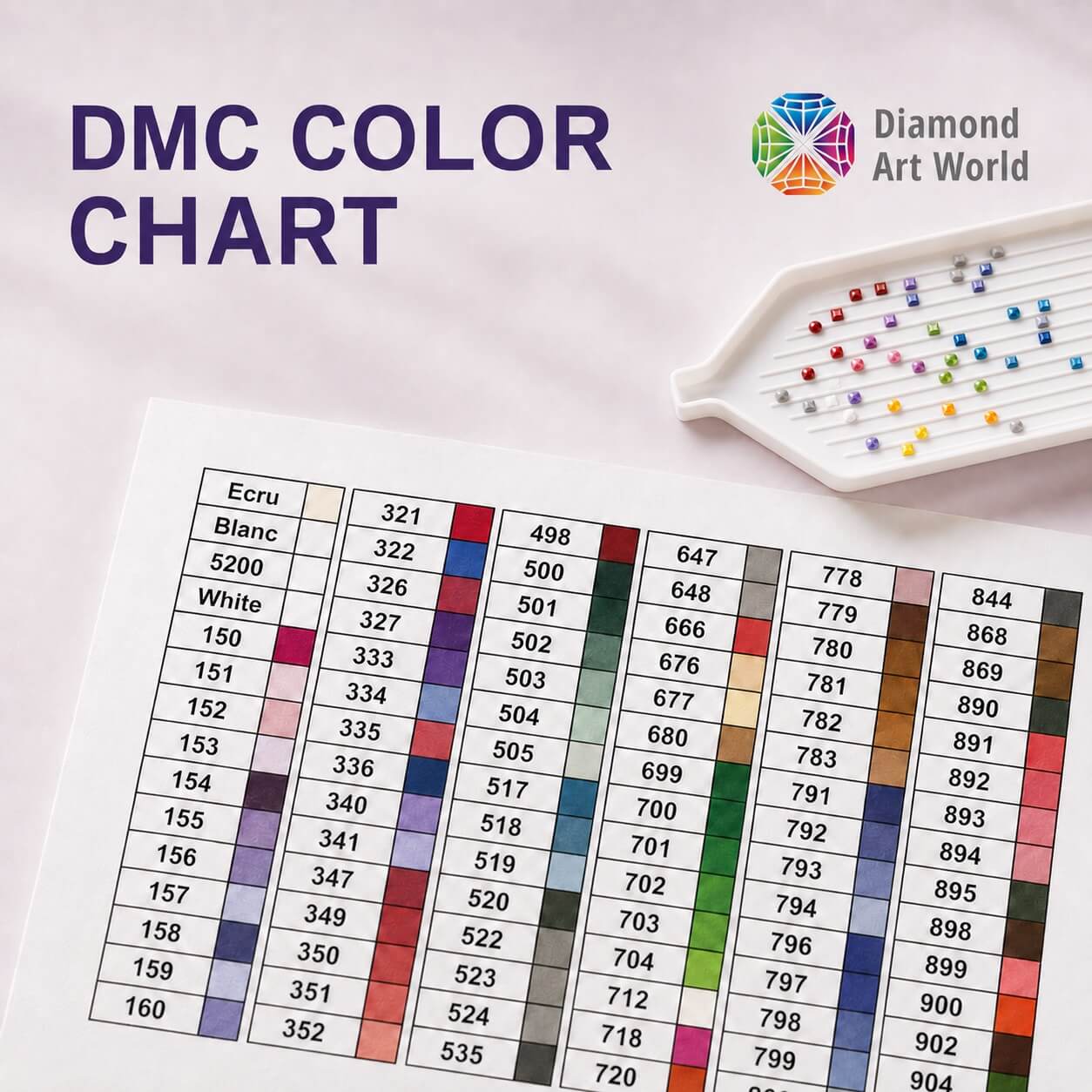
The canvas is pre-printed with symbols, and each symbol matches a color, so you just follow the pattern and build the image piece by piece. Most people start with a ready-made kit, which includes everything needed to finish the artwork. It looks simple, but it takes longer than most beginners expect, and it quickly becomes addictive.

What’s Inside a Diamond Painting Kit
A standard diamond painting kit usually includes:
- Pre-printed adhesive canvas with symbols
- Color-coded diamond drills (round or square)
- Diamond pen (applicator tool)
- Wax pad to pick up drills
- Plastic tray for sorting diamonds
Some kits also include extras like tweezers or multi-placer tools. You may also see terms like full drill (the whole canvas is covered) and partial drill (only parts are filled), which affect the final look and time needed.
If you want to try it with your own image, you can turn a photo into a custom version using a custom diamond painting kit.
Round vs Square Diamonds: Which Is Better?
There are two main types of drills, and the choice affects the final look and difficulty.
Round diamonds are easier to place and more forgiving. They are best for beginners because alignment doesn’t need to be perfect. The finished image has small gaps, but they are usually not noticeable.
Square diamonds fit edge-to-edge with no gaps, creating a more detailed and “full” look. However, they require more precision. If one piece is slightly off, the whole row can look uneven. Beginners often find them slower at the start.

How Diamond Painting Actually Works
It’s a simple step-by-step process:
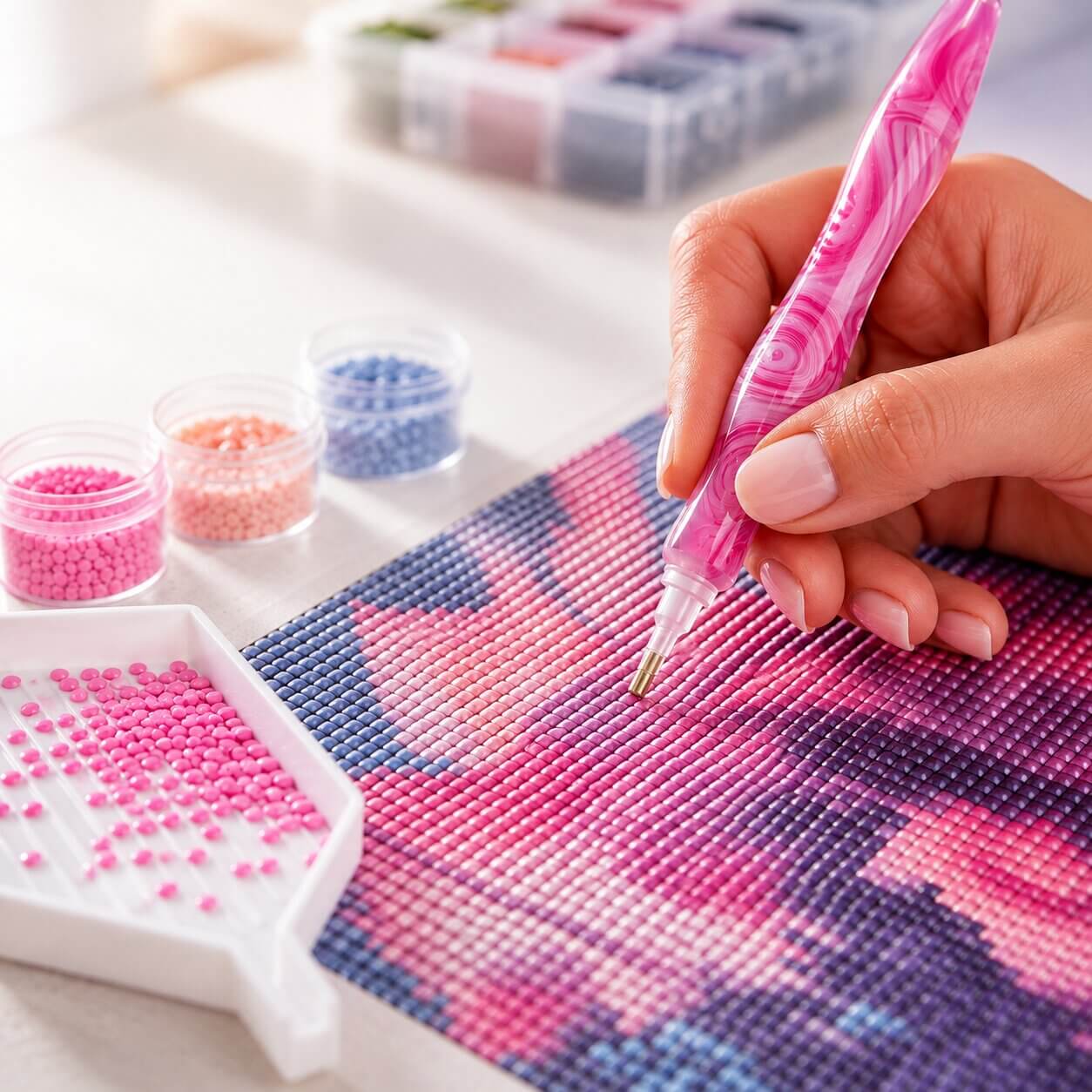
- Peel back a small section of the protective film on the canvas. Work in small areas to keep the adhesive clean and dust-free.
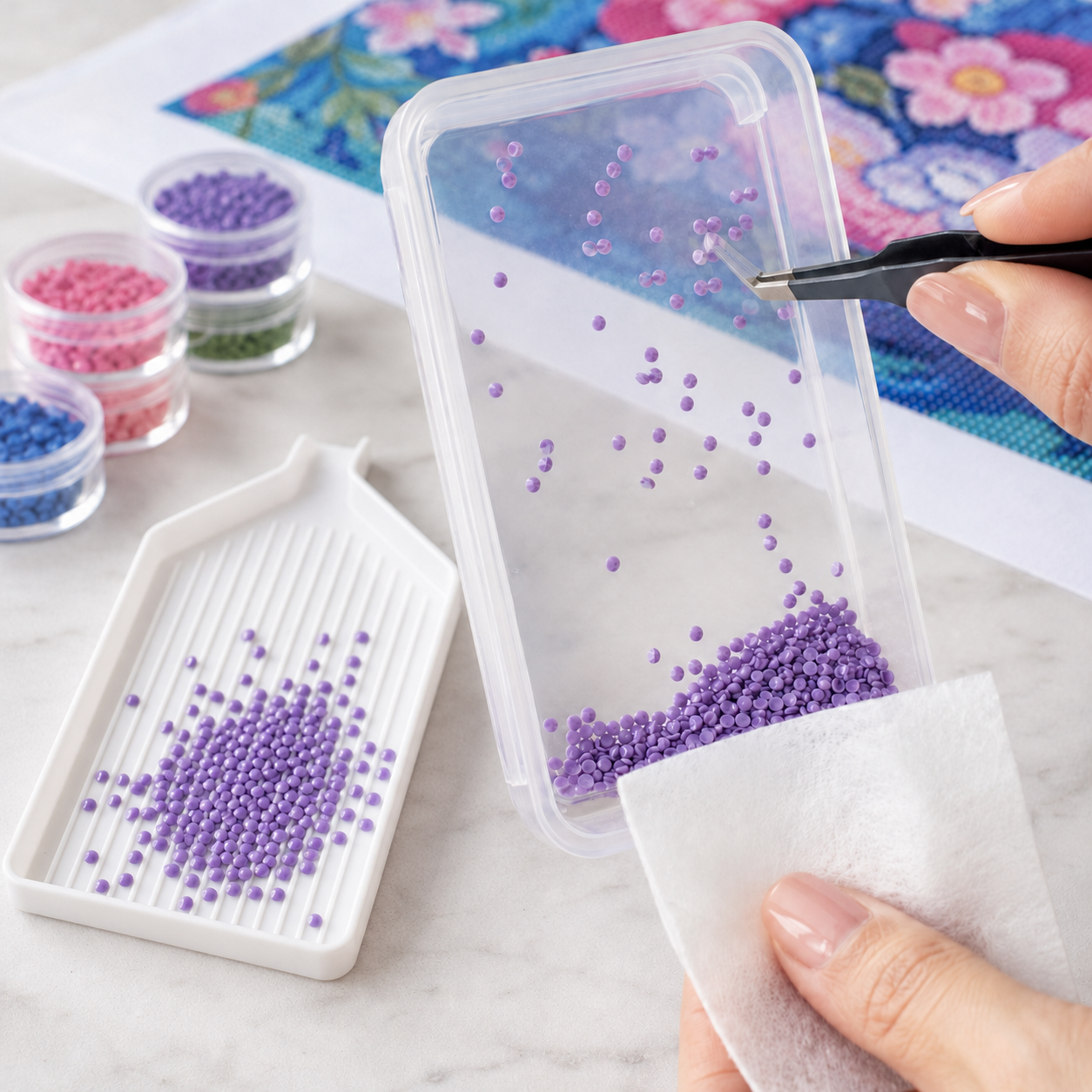
- Pour a small amount of diamonds into the tray. Shake the tray gently so the drills flip flat side down for easier pickup.
- Dip the pen tip into wax so it can pick up the drills. Refresh the wax when it stops gripping properly.
- Pick up one diamond with the pen. Keep the pen vertical to avoid dropping or misaligning the piece.
- Place it onto the matching symbol on the canvas. Lightly press to secure it without shifting nearby drills.
- Repeat section by section until the image is complete. Move systematically to keep rows straight and progress visible.
Keep each color in its own tray or bag while you work. Mixed colors are slow to sort and easy to place on the wrong symbol.
It sounds repetitive, and it is, but that’s exactly why people enjoy it. After a few minutes, you stop thinking about the steps and just focus on placing diamonds in a rhythm.
Is Diamond Painting Hard?
For most people, diamond painting is not hard to learn, but it can test your patience. The steps are simple and repetitive, so anyone can start.
What beginners underestimate is the time. Small sections feel easy, but finishing a full canvas, especially a large one, can take many hours or even days. It also isn’t always perfect:
- Large color blocks can feel boring
- Straight lines are harder than they look
- Wax runs out faster than expected
From experience, speed comes quickly: once you get used to the symbols and the movement, each session covers noticeably more of the canvas.
Square diamonds and very detailed designs add to the challenge. It’s easy to begin, can feel a little frustrating in the first few sessions, and becomes much more enjoyable once you get into a rhythm.
Is Diamond Painting Worth It?
Yes, if you enjoy slow, hands-on hobbies. Diamond painting gives you many hours of low-effort focus and a finished piece of art at the end.
It is worth looking at from three sides:
- Money: one kit usually lasts many evenings, so the cost per hour is low compared with most hobbies.
- Time: it is slow by design, and larger canvases can take weeks of evenings.
- Result: you end up with diamond art you can hang, frame or give as a gift, which most relaxing hobbies don’t give you.
It is also a simple way to switch off from screens in the evening.
It is not worth it if you want quick results or dislike repetitive work. In that case, start with a mini diamond painting kit before committing to a large canvas.
Who Is Diamond Art For?
Diamond art suits beginners, people who don’t consider themselves artistic, and anyone looking for a simple creative routine. The pattern guides every step, so drawing or painting skills don’t matter.
It’s also a good option for:
- Adults who want a low-effort hobby
- Kids who can follow patterns
- Anyone looking for a structured creative activity
Diamond Painting vs Paint by Numbers and Cross Stitch
Diamond painting is most often compared with paint by numbers and cross stitch, because all three follow a numbered or symbol-coded pattern. The difference is in what you place on the canvas and how forgiving it is.
| Diamond painting | Paint by numbers | Cross stitch | |
|---|---|---|---|
| How it works | Resin drills pressed onto a sticky, symbol-coded canvas | Acrylic paint brushed into numbered areas | Thread stitched in small X shapes on a fabric grid |
| Skill needed | Very little; no brush or needle control | Some brush control for edges and small areas | The most; you learn stitches and read a chart |
| Fixing mistakes | Lift the drill and place it again | Paint over once dry | Unpick the stitches |
| Mess and drying | No paint, no drying time | Paint, water and drying time | No mess |
| Finished look | Sparkling, mosaic-like surface | Flat, painted look | Soft, textile look |
Who Invented Diamond Painting?
No single person is credited with inventing diamond painting. The craft is generally traced to China, where it was first sold as "diamond embroidery": a printed, symbol-coded canvas filled with tiny resin rhinestones instead of thread.
The earliest patent on record covers how the canvases are made, not the craft itself. In July 2013, the Chinese laser company Han's Yueming filed a patent (CN103358798B, granted in 2015) for a laser-cutting process that produces adhesive diamond picture canvases. You'll often read that diamond painting was patented in 2010, but the patent record shows a 2013 filing.
During the late 2010s, diamond art kits spread through online marketplaces to Europe and North America. The real boom came in 2020, when people at home during lockdowns began sharing their progress online. By November 2020, the #DiamondPainting hashtag on TikTok had passed 830 million views.
The "5D" on many kits is a marketing label, not a measurement. It refers to the sparkle of faceted drills catching light from different angles. You can read more about drill shapes in our guide to diamond painting drills.
How to Choose Your First Diamond Painting Kit
Your first diamond painting kit should be easy enough to finish, but still nice enough that you want to display it. A medium-size canvas is usually the safest choice: enough detail to look good, without turning the project into a long commitment. If you’re not sure you’ll enjoy the hobby, a mini kit is a quicker way to find out.
Choose round diamonds for your first kit: they are faster to place and more forgiving when your rows are not perfectly straight. Most beginners who give up started with a canvas that was too large or too detailed.
Also look at the image itself. Designs with clear shapes, fewer tiny details, and strong color contrast are easier to follow. Portraits, pets, and dark scenes can be beautiful, but they are less forgiving if the canvas is small.
If you are choosing a custom photo, pick one with good lighting and a clear main subject. A bright, simple image usually turns into better diamond art than a crowded photo with many small faces or background details.

Final Thoughts
Diamond painting is not complicated, and that is its appeal: you place one diamond at a time until the image is complete, whether it’s a standard design or your own photo. Go in with the right expectations about time, and diamond art can be a surprisingly satisfying way to spend your evenings.